
Understanding Quetex Trading in Pakistan
📈 Explore Quetex Trading in Pakistan: how it works, key features, registration steps, risks involved, and its position among local trading platforms for investors.
Edited By
Isabelle Foster
Indices trading allows investors to buy and sell baskets of stocks representing a segment of the market. Instead of picking individual shares, you track the overall performance of a collection of companies. This makes it a simple way to diversify risk and gain exposure to broader market movements.
In Pakistan, indices trading is gaining popularity. Investors can trade indices like the KSE-100, which consists of the top 100 companies listed on the Pakistan Stock Exchange (PSX). By following such indices, you get a pulse of the Pakistani economy and stock market trends as a whole.
Trading indices differs from buying shares directly. Instead of owning the underlying stocks, you trade derivatives such as index futures or contracts for difference (CFDs). These instruments let you speculate on the index’s price movements without needing large capital to buy many individual stocks.
It’s key to understand that indices trading reflects market sentiment and economic conditions. For instance, a bullish KSE-100 often indicates growing investor confidence and corporate profits, while a decline suggests caution.
For Pakistani investors, trading local indices offers unique advantages:
Access to a broad market segment with a single trade
More manageable risk compared to individual stock trading
Potential for profit in both rising and falling markets through short-selling
However, it also involves risks like leverage impact, market volatility, and regulatory changes. Therefore, understanding how indices work and choosing the right platform licensed by Pakistan’s Securities and Exchange Commission (SECP) is essential.
Having a clear grasp on indices, their composition, and trading mechanisms will help you make more informed decisions. This guide explains the details so you can navigate the indices market confidently and responsibly in Pakistan.
Stock market indices are essential tools that gauge the overall performance of a specific segment of the stock market. Rather than focusing on individual companies, these indices track a group of selected stocks, providing investors a snapshot of market trends and economic health. For Pakistani investors, understanding indices offers a way to measure market movement without the hassle of analysing countless individual shares.
A stock market index represents the combined value of several stocks selected based on specific criteria such as market size, industry sector, or trading volume. These indices act like thermometers, showing whether markets are generally rising or falling. Their practical value lies in helping investors grasp market direction quickly, make portfolio decisions, or compare the performance of sectors.
For example, the KSE-100 Index in Pakistan comprises the top 100 companies traded on the Pakistan Stock Exchange (PSX). Tracking this index lets investors observe the broader market trend in Pakistan's economy without buying shares from each company.
Globally, indices like the Dow Jones Industrial Average, S&P 500, and FTSE 100 serve as benchmarks for broad economic health in their respective markets. The Dow Jones, with just 30 large companies, shows the performance of major US industrial firms, while the S&P 500 covers a wider spectrum of 500 large-cap firms. FTSE 100 performs a similar role for the UK market.
Pakistani traders often watch these global indices because movements abroad can impact domestic markets. For instance, a sharp fall in the S&P 500 may lead to downward pressure on the KSE-100 as international investor sentiment changes.
Stock indices are usually calculated based on two main methods: price-weighted and market-capitalisation weighted. A price-weighted index, like the Dow Jones, assigns more importance to stocks with higher prices, meaning a Rs 1,000 share affects the index more than a Rs 100 share. In contrast, market-cap weighted indices, such as the S&P 500 or KSE-100, give more weight to larger companies by multiplying their share price by the total number of shares outstanding.
This distinction matters because market-cap weighting better reflects the overall market value and is more representative of investor influence.
In a market-cap weighted index like the KSE-100, when a large company’s share price rises, it impacts the index more significantly than a smaller firm's price change. For example, an increase in the price of a major bank’s stock will move the index upwards more than a similar change in a small textile company.
On the other hand, in a price-weighted index, a rise in a high-priced stock always has a larger effect, regardless of the company's size. This can sometimes distort the market picture, as a few expensive stocks may dominate the index movement.
Understanding these mechanisms helps investors interpret index trends correctly, enabling smarter trading and portfolio decisions that suit Pakistani market conditions.
Understanding basics of indices trading helps Pakistani investors grasp how these markets work and the specific benefits they offer. It lets you get exposure to whole segments of the market without having to pick individual shares, saving time and risk.
Investing in indices means you put your money into a basket of stocks grouped together to represent a segment of the market. Unlike buying shares of one company, investing in an index spreads your risk across many companies. For example, if the KSE-100 index rises, it shows that the overall market is growing, even if one or two stocks are underperforming. This reduces reliance on any single company’s performance.
Trading indices, however, often involves contracts like CFDs (Contracts for Difference) or futures. These let you speculate on price movements without owning the underlying shares. Through CFDs, you can profit whether the index goes up or down by entering long or short positions. Similarly, futures contracts require a margin deposit and obligate you to buy or sell the index at a set price in the future. These derivatives are popular in Pakistan because they provide leverage, meaning your potential profits (and losses) are magnified, allowing traders to start with smaller capital compared to direct stock purchases.
One main advantage is diversification. By trading an index, you reduce risk linked to a single company’s volatility. This is particularly helpful in Pakistan’s sometimes turbulent stock market where individual stocks can be unpredictable due to political or economic events. For instance, the KSE-100 index tracks 100 large companies, offering a broader market picture than just one stock.
Liquidity is another key benefit. Major indices are traded in huge volumes daily, meaning you can enter and exit positions quickly without much price slipping. This accessibility helps Pakistani investors especially when using online brokers that offer international market indices like the S&P 500 or FTSE 100 alongside local ones, providing more trading opportunities beyond the PSX.
Pakistani investors use various strategies depending on their goals and risk appetite. Day trading involves buying and selling indices within the same day to capitalise on short-term price swings. This requires close monitoring and quick decisions.
Swing trading holds positions for days or weeks to benefit from expected market trends, offering a balance between time commitment and profit potential.
On the other hand, long-term investing in indices aims at steady growth over years, suitable for those looking to build wealth gradually by riding broader market cycles. Each approach suits different trader profiles, but all rely on understanding market movements and risk management.
Indices trading can be a practical, accessible way for Pakistani investors to diversify and tap into both local and global markets without high capital investment or the challenge of individual stock selection.
Understanding which indices are most relevant for Pakistani investors helps tailor trading strategies efficiently. These indices reflect both local market conditions and international economic trends that affect portfolios. They provide practical tools for diversification and risk management, especially through indices that represent a broad range of sectors or geographies.
The KSE-100 Index is the main benchmark of the Pakistan Stock Exchange (PSX), tracking the top 100 companies by market capitalisation. It serves as a pulse of the Pakistani stock market’s overall health. For investors, this index offers a snapshot of economic sectors from banking to textiles, energy, and more. Trading or investing in the KSE-100 allows exposure to Pakistan’s largest and most liquid stocks without selecting individual shares.
For instance, during periods of political stability or favourable monetary policy adjustments, the KSE-100 usually reacts strongly, offering trading opportunities based on macroeconomic trends. Its liquidity and frequent price movements attract day traders and long-term investors alike.
The KSE-30 Index narrows focus to the 30 most liquid and financially sound companies listed on the PSX. It provides a more concentrated view compared to the broader KSE-100 and is useful for those seeking exposure to highly traded stocks in Pakistan.
Meanwhile, the KMI-30 Index features 30 Shariah-compliant companies, catering to investors looking for Islamic finance options. This index follows Islamic principles by excluding companies involved in prohibited activities like alcohol, gambling, or interest-based banking, giving an alternative for investors observing these concerns.
Both indices complement KSE-100 by offering focused insights—KSE-30 highlights liquidity and financial health, while KMI-30 addresses religious investment criteria.
Global indices such as the S&P 500 and Dow Jones in the US, along with the UK’s FTSE 100, represent the performance of major international markets. For Pakistani traders, these indices provide a way to diversify beyond the local economy, which can be affected by domestic policy changes or regional events.
S&P 500 covers a broad cross-section of American industries, making it a preferred choice for exposure to global tech giants and manufacturing firms, while Dow Jones offers a snapshot of 30 large US companies. FTSE 100 focuses on the UK’s biggest firms, many of which have a global footprint. Tracking these helps investors hedge risks linked to Pakistan’s market and tap into faster-growing economies.
Pakistani traders can access these international indices through online platforms operating in Pakistan with permissions from SECP. Brokers like eToro, Interactive Brokers, and some local firms provide contracts for difference (CFDs) or futures on foreign indices. These instruments allow trading the price movement without owning underlying shares.
This access opens doors for investors to trade in US or UK markets during their trading hours, which differ from PSX timings. It also enables portfolio diversification and tactical plays on global economic shifts, for example, US Federal Reserve decisions or Brexit developments, which impact these indices directly.
Trading international indices complements local market exposure, helping balance portfolio risks while capturing global growth opportunities.
By understanding these popular indices, Pakistani investors are better equipped to construct balanced portfolios that reflect local realities and global opportunities.
Starting indices trading in Pakistan requires some key steps, from choosing the right platform to understanding regulatory rules and placing your first trade. Getting these basics right helps you avoid common pitfalls and trade confidently.
Local brokers offering indices trading: Many Pakistani brokers now provide indices trading, often linked to the Pakistan Stock Exchange (PSX) indices like KSE-100. Examples include brokers registered with the Pakistan Mercantile Exchange (PMEX) and licensed by the Securities and Exchange Commission of Pakistan (SECP). Local brokers may offer more tailored support regarding regulations, Pakistani banking systems like JazzCash and Easypaisa, and Urdu-language customer service. This relevance is especially helpful for first-time traders who want localised guidance when trading indices.
International brokers accessible to Pakistani investors: Several offshore brokers allow Pakistanis to trade global indices such as the S&P 500, FTSE 100, and Dow Jones. Platforms like Interactive Brokers, Saxo Bank, and eToro are popular because they offer advanced tools and access to multiple markets. However, they require international bank accounts or payment methods and understanding of foreign currency risks. This option suits more experienced traders seeking diversified exposure beyond Pakistan.
CNIC and KYC requirements: To open a trading account in Pakistan, you must provide your Computerised National Identity Card (CNIC) to verify identity alongside Know Your Customer (KYC) documentation like proof of residence and income source. These checks help prevent fraud and comply with anti-money laundering laws. Pakistani brokers strictly follow these procedures to comply with SECP and Financial Monitoring Unit (FMU) rules.
Rules by Securities and Exchange Commission of Pakistan (SECP): SECP oversees capital markets and enforces regulations to protect investors. It regulates brokerage firms’ licensing, trading practices, and disclosures. When trading indices through local brokers, following SECP guidelines ensures transparency, investor protection, and market integrity. For international brokers, Pakistani investors should confirm the broker’s regulatory status and be aware of SECP warnings or alerts.
Understanding order types and margin requirements: When trading indices, it's essential to know your order types—market orders execute immediately at the current price, while limit orders set your buying/selling price. Margins allow you to trade larger positions with a smaller capital deposit but increase risk. For example, trading KSE-100 futures may require a margin deposit of a few lakh rupees depending on contract size. Being clear about these helps manage capital efficiently.
Monitoring and managing trades: Once your trade is live, keep a close eye on market movements and set stop-loss orders to limit potential losses. Index prices can change quickly due to local news or global events. Effective monitoring and timely decisions can protect your investment from unexpected swings. Use broker tools and alerts regularly to stay updated on your trades’ performance.
Starting indices trading the right way, with proper platforms, regulatory knowledge, and trade management, sets you up for a smoother experience in Pakistan's growing financial markets.
Trading indices offers good opportunities, but it also carries risks that Pakistani investors should manage carefully. Understanding market volatility and the effects of leverage is essential to avoid heavy losses. Practical risk management tools, like stop-loss orders and diversification, can protect your capital and improve trading outcomes.
Leverage lets you open larger positions than your actual investment, magnifying both profits and losses. For instance, if you trade the KSE-100 Index with 10x leverage, a 1% upward move could mean a 10% gain. However, the same 1% drop would wipe out 10% of your capital. This can quickly lead to heavy losses unless trades are monitored carefully.
Market volatility affects indices prices due to factors like political events, economic data releases, or global market movements. For example, a sudden interest rate decision by the State Bank of Pakistan can cause sharp swings in the PSX indices. Similarly, international events like oil price changes or US economic reports influence global indices accessible to Pakistani traders. Volatility means indices prices can move fast and unpredictably, so staying informed is important.
Stop-loss orders limit your potential losses by automatically closing a position once the price reaches a set level. For example, if you buy the KSE-30 Index and place a stop-loss 2% below your entry price, the trade closes before losses grow bigger. Position sizing is equally important — never risk too much of your total capital on a single trade. Many experts suggest risking no more than 1-2% per trade to preserve your account.
Diversification in indices trading means not putting all your money into one index only. Instead, you could split investment between the KSE-100, S&P 500, and FTSE 100. This spreads the risk because economic or political issues are unlikely to affect all markets equally. For instance, if the local market faces loadshedding worries, your foreign index positions may remain stable, balancing overall risks.
Effective risk management helps you stay in the game longer and avoid sudden shocks that can drain your trading account.
In summary, Pakistani investors should approach indices trading with an understanding of leverage and volatility while using practical tools like stop-loss orders and diversification to keep risks manageable.
📈 Explore Quetex Trading in Pakistan: how it works, key features, registration steps, risks involved, and its position among local trading platforms for investors.
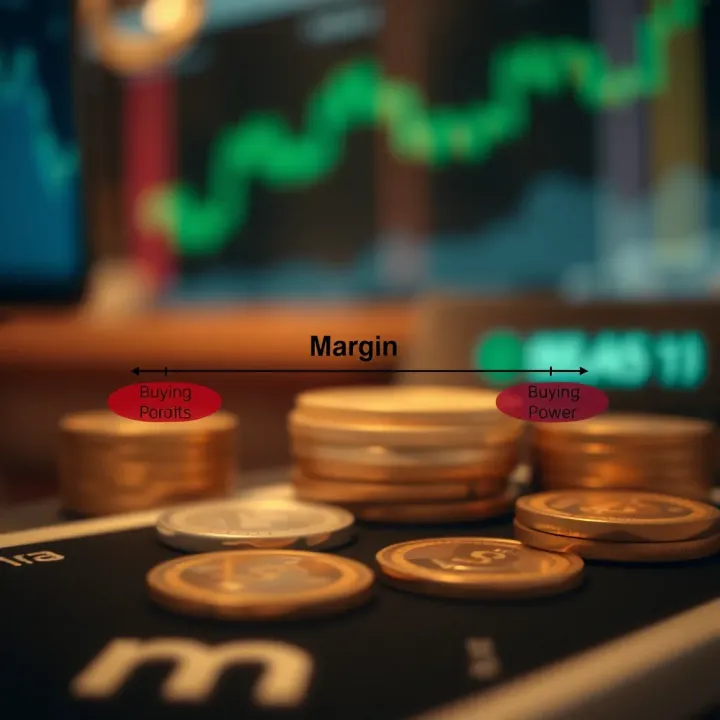
📊 Learn how margin works in trading, understand risks, margin calls, and boost your buying power safely in Pakistan’s markets with expert tips.
📈 Dive into CFDs trading in Pakistan! Learn how CFDs work, spot risks, pick brokers, and get practical tips for smart, responsible trading.
📊 Master trading graphs to boost your trading in Pakistan's markets! Learn types, interpretations & tips to spot trends and trade smart confidently.
Based on 9 reviews