

Understanding Trade Graphs in Market Analysis
📈 Understand trade graphs and their impact on market analysis in Pakistan. Learn key insights, data interpretation, and tools for better trading decisions.
Edited By
James Whitaker
In trading, BOS stands for Break of Structure. It's a key sign showing when the market's previous trend or pattern has shifted. This change can signal important opportunities for traders, from short-term scalpers to long-term investors.
A BOS happens when price breaks a critical support or resistance level that formed the prior market structure. For example, if an asset like Pakistan Stock Exchange (PSX) listed company shares have been rising steadily but suddenly drop below the recent low, that's a BOS indicating the uptrend may be ending.
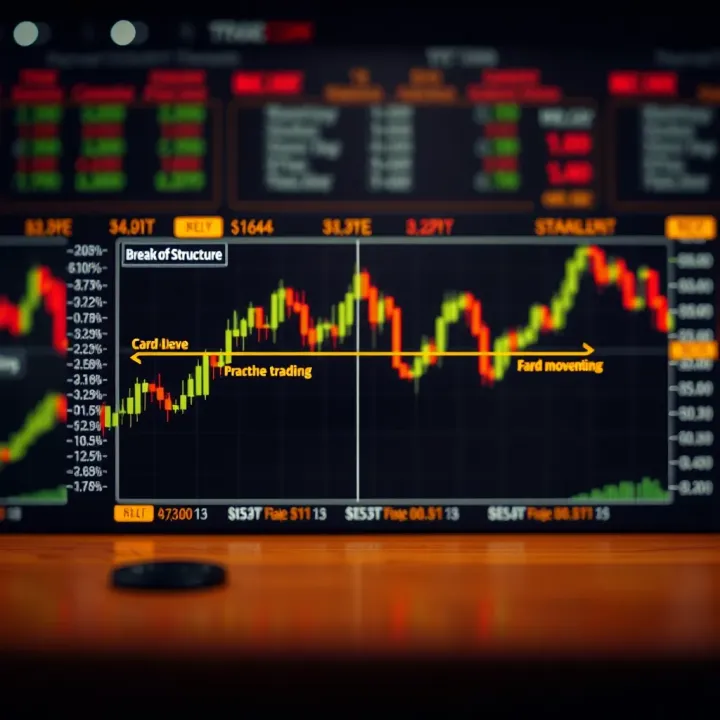
Understanding BOS is more than spotting a break; it helps traders decide where to enter or exit the market. It works alongside other tools like moving averages or RSI but gives clear clues about a shift in supply and demand dynamics.
Trend confirmation: BOS confirms the start of a new trend or end of an old one.
Risk management: Traders can place stop losses just beyond BOS points to protect capital.
Trade timing: It provides better entry points compared to chasing price action blindly.
Look for these signs:
Higher highs/lows get broken during an uptrend — suggests momentum loss.
Lower highs/lows break in a downtrend — hints at reversal or acceleration.
Volume spikes at break points — indicates strong market interest.
For instance, in Karachi’s currency market, if the USD to PKR rate breaches a previous peak with heavy volume, it signals a BOS that often leads to further movement in that direction.
A BOS is not just technical jargon; it's the market telling you where it's headed next. Recognising it helps you align your strategy with real market behaviour.
Use BOS in combination with local market indicators and economic news.
Test your BOS strategy in demo accounts on local platforms like PSX or foreign ones like Forex brokers operating in Pakistan.
Keep in mind load-shedding or political events, as sudden news can create false BOS signals.
Focusing on BOS will improve your ability to read charts, time entries and exits, and understand market sentiment in both global and Pakistani markets.
Break of Structure (BOS) is a fundamental concept that traders use to understand shifts in market trends. It marks a decisive moment when the price action breaks past previous highs or lows, signalling a potential change in the market’s direction. Recognising BOS helps traders identify when the market moves from an uptrend to a downtrend or vice versa, which can significantly improve timing for entry and exit points.
Market structure refers to the overall pattern of price movements, typically marked by successive highs and lows. In an uptrend, prices generally form higher highs and higher lows, while in a downtrend you observe lower highs and lower lows. Understanding this pattern allows traders to see the bigger picture beyond short-term price fluctuations.
For example, if the Karachi Stock Exchange (KSE-100 index) has been steadily making higher highs over several weeks, it’s displaying a bullish market structure. Conversely, a series of lower lows on the same index would indicate bearish conditions.
A BOS occurs when the price breaks through a key structure level, such as a previous swing high in a downtrend or a swing low in an uptrend. This break often signals a reversal or continuation of the trend depending on context. For instance, if the PKR/USD pair breaks below its recent support level, it may suggest the start of a downtrend.
Traders watch BOS closely because this break gives early clues about momentum shifts. When volume supports the break, the signal is stronger, making it a practical tool for timing trades rather than relying on lagging indicators.
Support and resistance levels are horizontal price points where the market has historically paused or reversed. While BOS involves breaking these levels, it goes further by confirming that the previous market structure no longer holds. For instance, price may test a support level multiple times without breaking it, but once BOS happens, that support becomes obsolete.
This distinction is vital because support and resistance only show areas of interest, whereas BOS confirms a structural change. Traders often wait for BOS rather than reacting to every bounce off support or resistance.
Though BOS is a type of breakout, not every breakout qualifies as a BOS. Breakouts might be temporary moves beyond a level without real trend change, often called fakeouts. Fakeouts trap traders into false moves, causing losses.
For example, a stock listed on the PSX might briefly break above a resistance level on low volume but quickly fall back, misleading traders. BOS requires clear, sustained movement past key levels with confirmation like increased volume or follow-through price action.
Successful traders combine BOS with other confirmations to avoid traps, focusing on genuine breaks in market structure to guide their decisions effectively.

By mastering the distinction between BOS, support/resistance, and fakeouts, traders in Pakistan and beyond can better navigate market noise and improve their trading accuracy.
Understanding Break of Structure (BOS) is vital for traders because it signals real shifts in market trends, offering a clearer edge in decision-making. When the price action breaks a previous high or low and establishes a new structure, it often indicates that the market sentiment is changing. This helps traders avoid holding onto losing positions during reversals or missing out on chances to ride a continuing trend.
Recognising reversal points is one of the key ways BOS helps traders. When the price breaks the last swing low in an uptrend, or the last swing high in a downtrend, it points to a potential trend reversal. For example, if the KSE-100 index consistently made higher highs and lows but suddenly breaks a previous low, it suggests bearish momentum may be taking over. Spotting such breaks early allows traders to exit or short the market before the momentum fully shifts.
On the other hand, confirming continuation of trends is equally important. Sometimes a price pause or pullback can seem like a reversal but is actually a consolidation before the trend moves on. A clear BOS in the direction of the trend confirms strength and encourages traders to stay in their positions. For instance, in Forex markets like USD/PKR, if the price breaks a previous high during an uptrend, it reaffirms bullish sentiment and traders can add to their long positions confidently.
Timing entries with BOS confirmation allows traders to enter the market with a better chance of success. Rather than guessing when a trend might change, waiting for a BOS provides concrete proof that the market structure has shifted. This helps reduce premature entries and lowers the risks associated with false breakouts. A swing trader in Pakistan may wait for a BOS on daily charts before opening positions to benefit from medium-term moves.
Setting stop-loss and take-profit based on BOS improves risk management. A stop-loss placed just beyond the broken structure level protects traders if the market suddenly reverses again. Similarly, take-profit targets can be aligned with the next expected structure level or resistance zone. This method works well in volatile markets like commodities or Pakistani equities where price swings can be sharp. Using BOS levels for stops and limits aligns trading plans with actual market behaviour, making trades more disciplined and less emotionally driven.
Successful trading often comes down to recognising when market sentiment truly shifts. BOS marks such moments clearly, helping traders enter, exit, and manage risk with greater precision.
Spotting Break of Structure (BOS) directly on trading charts helps traders make timely decisions and confirms shifts in market trends. Knowing when the market's highs or lows get broken can reveal turning points or strong continuations, giving you the edge to enter or exit trades effectively.
Reading candlestick patterns offers practical clues about market structure. A series of candlesticks showing lower highs and lower lows in an uptrend could indicate the start of a bearish reversal, especially if a key support level breaks. For instance, if a bullish candle is followed by a larger bearish candle that closes below the previous swing low, it suggests a weakening of price momentum and possibly a BOS. Candlesticks also help confirm the strength of a break; a closing price outside the previous structure is more convincing than an intraday spike.
Using price action to mark structure points means observing where price consistently reverses or pauses. Traders often draw horizontal lines across swing highs and lows to mark these zones. Price action tells you if the market respects these levels or breaks through decisively, signalling BOS. For example, on a Pakistan Stock Exchange (PSX) chart, a repeated rejection near a high followed by a close below a prior low points to breaking the market structure. This technique avoids reliance on fancy indicators and helps in understanding raw market sentiment.
Role of trendlines and moving averages is central to confirming structure breaks. Trendlines that connect swing highs or lows visually highlight support or resistance lines. A clean break below an upward trendline signals a BOS and potential trend reversal. Moving averages, especially the 50-day or 200-day, often act as dynamic support or resistance; crossing below these averages may coincide with BOS, offering confirmation. Pakistani traders using platforms like TradingView or MetaTrader find these tools practical for quick visual cues.
Combining volume and momentum indicators helps filter genuine breaks from false ones. A BOS confirmed by increased volume shows strong trader participation; for example, a BOS on KSE-100 index accompanied by a volume spike is more reliable. Momentum oscillators like the Relative Strength Index (RSI) or Moving Average Convergence Divergence (MACD) provide additional clues. If the RSI drops below a previous support level alongside a BOS, it confirms a loss of bullish momentum. Using these indicators together prevents jumping into trades on fakeouts.
Spotting BOS effectively requires blending price action analysis with supportive tools. In the Pakistani trading environment, mastering this skill improves entry timing, risk management, and ultimately, profit potential.
This focused approach to chart analysis benefits not just day traders but also swing traders who depend heavily on recognising clear trend shifts. Always combine BOS detection with broader market context before taking decisions.
Break of Structure (BOS) plays a significant role in shaping how traders approach the market. It helps them pinpoint when a trend might be changing, allowing for more precise entries and exits across various strategies. Whether you are engaged in swing trading or day trading, recognising BOS can offer actionable signals tied directly to price action, improving your decisions.
Spotting medium-term trend shifts is a vital part of swing trading, which typically involves holding positions from a few days up to several weeks. BOS helps traders identify when a medium-term trend reverses or strengthens, based on the breaking of previous key highs or lows. For example, if the KSE-100 index breaks above a previous resistance level, it signals the shift from a bearish to a bullish phase, prompting a swing trader to consider a long position.
Planning trades around BOS signals means using these break points to set entry and exit levels. A trader might enter once the structure breaks with a confirming candle close, reducing false signals. Stop-loss orders can be placed just below the broken level to minimise risk. This approach is practical in volatile markets like Pakistani equities, where sudden news or economic data can quickly shift trend structures.
Day trading and scalping require a quick response to structure breaks, as positions are held for minutes or hours. A BOS event on lower timeframes, such as 5-minute charts, alerts the trader to immediate shifts in momentum. For instance, when a currency pair like USD/PKR breaks a short-term structure during trading hours, a scalper can jump in quickly to ride the move, capturing small but consistent profits.
Managing risks with tight stop-loss orders is essential here due to the fast pace of trades. The trader sets stop-loss just beyond the BOS point, ensuring minimal loss if the price reverses. This risk control is especially important in volatile periods or during major economic announcements, which are common in Pakistan's forex and commodity markets. Tight stops help protect capital while still allowing room for the trade to develop following the break.
Applying BOS within these strategies not only sharpens timing but also offers a clear framework to manage entry, exit, and risk, adapting well to Pakistan’s dynamic markets and trading tools.
By aligning BOS with different timeframes and trade durations, you can improve your market reading skills, making better decisions whether trading PSX stocks or forex pairs.
Trading based on Break of Structure (BOS) signals can be rewarding but also prone to errors if not approached carefully. Mistakes like misreading false breaks or ignoring the wider market context often lead traders into unprofitable decisions. Understanding these pitfalls helps you sharpen your market reading skills and protect your capital effectively.
Recognising fakeouts: A fakeout occurs when price appears to break key support, resistance, or structure levels but quickly reverses direction. Many traders see this initial break as a confirmation signal and jump into trades prematurely. However, fakeouts are common, especially in volatile markets like the Pakistan Stock Exchange (PSX) where sudden news or low volumes can cause sharp, temporary price moves. To spot fakeouts, watch for quick price reversals soon after the break or low trading volume during the break. For example, if KSE-100 briefly breaks a resistance level but closes the day below it, this often indicates a false break.
Waiting for confirmation before taking trades: Avoid entering trades solely on the first break of structure. Confirmation could come as a close beyond the new level on a higher timeframe or a retest that holds firm. Waiting reduces exposure to false signals and improves trade success. For instance, after a BOS on a 1-hour chart, waiting for the daily chart to align or a pullback test adds confidence. Patience with confirmation helps Pakistani traders manage risks better, especially when trading less liquid stocks or commodities.
Considering multi-timeframe analysis: BOS detection on a single timeframe can be misleading. It’s vital to check higher and lower timeframes to understand strength and validity of the break. A BOS on a 15-minute chart may contradict the dominant trend on the daily chart. For Pakistani traders, this means looking at both short-term moves and broader trends in indices like KSE-100 or currency pairs like USD/PKR. Multi-timeframe checks prevent traps set by market noise and ensure your trading decisions consider the bigger picture.
Assessing fundamental factors alongside BOS: Technical signals like BOS don’t operate in isolation. Economic news, political events, or central bank announcements can heavily influence market structure. Ignoring fundamentals can cause you to misinterpret a BOS. For example, a BOS in the PKR/USD pair during a period of SBP rate changes or foreign exchange interventions requires careful assessment. Combining fundamental insight with BOS signals gives you a clearer understanding of whether a trend change is genuine or just short-lived market reaction.
Successful BOS trading depends on patience, careful validation, and awareness of broader market conditions. Avoiding common mistakes safeguards your trades from unnecessary losses.
By recognising fakeouts, waiting for proper confirmation, looking across multiple timeframes, and factoring in fundamental changes, Pakistani traders can use BOS signals more reliably and boost their trading performance.
Break of Structure (BOS) holds a practical place for traders in Pakistan’s markets, especially in the way it helps interpret price actions within local contexts. While global markets offer more liquidity and data, the Pakistan Stock Exchange (PSX) and other regional platforms present unique challenges like volatility influenced by political events or economic announcements. BOS offers a clear technique to read trend shifts regardless of these factors, making it a valuable tool for Pakistani traders.
Understanding BOS effectively can reduce guesswork, especially during uncertain times such as budget announcements or foreign remittance fluctuations. It enables traders to pinpoint momentum changes while considering the peculiarities of Pakistani market behaviour, such as responses to rupee depreciation or international commodity price shifts.
Applying BOS to the KSE-100 index provides a reliable method for analysing broad market trends. Since KSE-100 reflects the performance of leading Pakistani companies, spotting BOS on its chart helps investors identify meaningful trend reversals or continuations at the index level. For instance, a BOS break of the previous swing high may signal renewed bullish momentum, while a break of a swing low can warn of an approaching downtrend.
This technique is particularly useful during volatile phases when the market reacts sharply to news like policy rate adjustments by the State Bank of Pakistan (SBP) or geopolitical developments. Traders who rely on BOS can avoid the noise and focus on structural changes rather than temporary price fluctuations.
Examples from Pakistani stocks also highlight the importance of BOS. Stocks like Engro Corporation or Lucky Cement often exhibit clear market structures. When BOS occurs, either breaking previous support or resistance levels, it confirms shifts in trend direction. This insight assists traders in smart entry and exit decisions, especially since Pakistani stocks are sensitive to corporate earnings announcements and sector-specific developments.
In forex trading, BOS plays a key role when tracking currency pairs like USD/PKR. This pair is heavily influenced by Pakistan’s economic indicators, remittance inflows, and foreign exchange reserves. Identifying BOS in USD/PKR charts can help spot trend shifts caused by currency interventions or changes in trade balances. For example, a BOS break after a prolonged consolidation might indicate a fresh movement in the rupee’s valuation.
For commodities and futures trading, BOS provides clarity amid price volatility linked to local and global factors. Commodities like wheat, sugar, or crude oil futures on Pakistan Mercantile Exchange often respond to seasonal demand, government policies, and international supply disruptions. Traders using BOS can better gauge when a commodity's price structure is changing, helping them anticipate trends and manage risk more effectively.
For traders in Pakistan’s financial markets, BOS acts as a practical guide to navigate both stock indices and volatile forex or commodity markets, by spotlighting clear changes in market dynamics before they fully unfold.
Applying Break of Structure (BOS) concepts effectively can sharpen your market insight and improve decision-making, especially within Pakistan's unique trading environment. Understanding the practical use of BOS through local tools and disciplined trading habits makes a noticeable difference in results.
Pakistani traders have access to several charting softwares that support detailed market structure analysis and BOS identification. Software like MetaTrader 4 and TradingView are widely popular due to their user-friendly interfaces and rich features such as custom indicators, candlestick pattern recognition, and multi-timeframe analysis. These tools help pinpoint BOS levels more precisely, allowing traders to react faster to trend changes in markets like the KSE-100.
Besides desktop platforms, mobile apps like those offered by local brokers or Daraz's financial services also integrate charting options handy for on-the-go analysis. Using these tools alongside BOS principles gives a clearer picture of when a structure break confirms a genuine trend shift rather than a false breakout.
Broker resources also play a key role in leveraging BOS effectively. Many Pakistani brokers provide in-depth market research, live webinars, and real-time alerts about major structural breaks in the market. For example, brokers like JS Global and Al Meezan offer educational content tailored to BOS strategies, helping traders refine entry and exit points. Utilizing these resources means you’re not just relying on charts but also getting expert insight aligned with your trading approach.
Avoiding impulsive trades is critical when using BOS signals. The temptation to enter a trade immediately after spotting a break can often lead to losses, especially during volatile sessions on the PSX or the forex market involving USD/PKR pairs. Waiting for confirmation, such as a retest of the broken structure level or confirmation from volume indicators, reduces the risk of falling into fakeouts.
Risk management is equally important to protect your capital. Effective BOS trading involves setting tight stop-loss orders just beyond the broken structure point to limit downside exposure. Additionally, position sizing should align with your overall risk tolerance. For instance, a trader should avoid putting more than 1-2% of their total trading capital at risk on a single trade. This careful approach helps weather sudden market shocks like currency fluctuations or unexpected news impacting commodity prices.
Discipline in following BOS signals, combined with proper risk controls, builds confidence and consistency in trading, turning market structure understanding into profitable opportunities.
By blending local tools, broker support, and a disciplined mindset, Pakistani traders can harness BOS signals better and achieve more reliable trading outcomes.
📈 Understand trade graphs and their impact on market analysis in Pakistan. Learn key insights, data interpretation, and tools for better trading decisions.

📈 Master trading charts with this practical guide! Learn to read market trends, use key indicators, and improve your trading decisions in Pakistan and beyond.
📊 Explore the trading book in finance—how it's made, managed, and valued. Learn key risks, differences from banking book, and regulatory hurdles traders face.
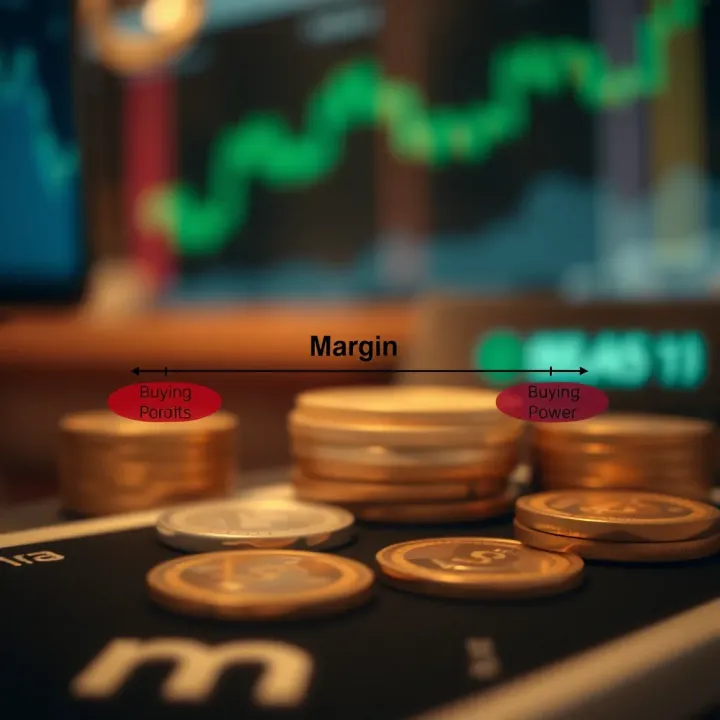
📊 Learn how margin works in trading, understand risks, margin calls, and boost your buying power safely in Pakistan’s markets with expert tips.
Based on 8 reviews