
XAUUSD Gold Price Forecast and Key Influences
💰 Explore the XAUUSD forecast with fresh insights on gold price trends, economic & geopolitical factors shaping the market for Pakistani traders 🇵🇰📈
Edited By
Ethan Hughes
Gold has always held a special place in Pakistan's economy and culture, acting as both an investment and a safeguard against uncertainty. With the local market constantly responding to global shifts and domestic dynamics, understanding what drives today's gold price in Pakistan is vital for anyone involved in trading, investing, or advising clients.
This article breaks down the key factors that influence gold prices in Pakistan right now—ranging from economic indicators like inflation and currency value to local political developments and global market trends. We'll also cover how technical analysis tools help predict short-term price movements, giving readers a practical frame to make better decisions.
Whether you're a trader looking to time the market or an investor seeking a safer harbor during turbulent financial seas, grasping these nuances will enhance your ability to act swiftly and confidently. Throughout the sections ahead, expect clear explanations, relevant examples, and actionable insights tailored specifically for the Pakistani market's complexities.
Understanding the current trends influencing gold prices in Pakistan helps investors, traders, and financial analysts make smarter calls. Gold’s price in Pakistan doesn’t just swing by chance; it reacts sharply to a mix of global events and local shifts. For example, when the world economy shivers, Pakistani gold buyers often feel the tremors instantly. Keeping a finger on these trends means you can better time your entry and exit in the market.
Pakistan's gold price is tied closely to the pulse of global markets. Take 2023, when tensions in the Middle East sent gold soaring worldwide. This created ripples in Pakistan's local prices too, as demand surged from investors looking for safe havens. Global commodity exchanges like COMEX set benchmarks that traders here watch like hawks. So, a hike or plunge overseas often rounds off as a similar move locally, adjusted for currency and import factors.
The US dollar acts like a seesaw for gold prices worldwide—including Pakistan. Since gold is typically priced in dollars, a stronger dollar usually puts pressure on gold prices because it becomes more expensive in other currencies. For instance, when the dollar edged up against the Pakistani rupee recently, gold prices in rupees took a slight dip. This relationship is a key tool for traders—watch dollar index movements and you get an early hint on gold price shifts in your local market.
Inflation doesn't respect borders; a rise globally often pushes gold prices higher, reflecting buyers' desire to protect wealth from eroding currency values. During periods when inflation in major economies like the US or the EU accelerates, gold traditionally shines as a hedge. This zigzag is visible in Pakistan too—especially when local inflation climbs alongside global trends. For instance, inflation growth in countries with close trade ties to Pakistan can indirectly influence the local appetite for gold as a secure asset.
The Pakistani rupee’s ups and downs play a huge role in local gold prices. When the rupee loses strength, gold becomes pricier for buyers right here at home because imports cost more. Say the rupee slipped against the dollar amid political uncertainty; gold retailers often jacked up prices anticipating higher costs. Stability in currency brings predictability, which investors appreciate, but volatility sparks buying sprees as people move funds into gold.
Pakistan’s government policies, especially import duties on gold, can make or break how expensive gold feels to the average buyer. Recently, changes in customs duties on gold imports have made a noticeable difference at the customer level. Higher duties push prices up, discouraging imports, while reductions can loosen up supply chains and ease prices a bit. Traders and investors watch these policy shifts closely since they directly affect margins and buying power.
Local consumer habits shape demand more than most realize. In Pakistan, gold isn’t just an investment; it’s deeply embedded in cultural traditions—from weddings to gifts. Investments in gold jewelry often spike during festive seasons like Eid, pushing prices upward. Meanwhile, savvy investors look at gold as a long-term store of value amid economic uncertainty. Recognizing these patterns helps traders forecast demand cycles, giving them an edge in a market driven by both sentiment and solid economics.
Staying in tune with these global and local trends arms market players with the insight needed to anticipate price shifts rather than just react to them. It keeps investments safer and decisions smarter in a market as lively and layered as Pakistan’s gold scene.
When it comes to anticipating the movement of gold prices in Pakistan, certain economic indicators stand out as particularly telling. These indicators offer a snapshot of the economic environment influencing gold demand and supply, hence shaping its price. Focusing on these markers allows traders, investors, and financial analysts to make informed decisions rather than relying on guesswork or trending news alone.
Understanding these key factors enables stakeholders to detect early signs of price changes. For instance, shifts in inflation or interest rates can directly impact gold's appeal as a safe haven or investment vehicle. We'll break down the most critical indicators, explaining not just what they are but why they matter practically in Pakistan’s dynamic economy.
Interest rates play a significant role in directing the flow of capital between assets like bonds and gold. When the State Bank of Pakistan hikes interest rates, fixed-income investments become more attractive due to higher yields. This can draw money away from gold, leading to a drop or stabilization in gold prices. Conversely, lower interest rates often make gold a better store of value because the opportunity cost of holding non-yielding gold decreases.
For example, if the central bank raises rates to curb inflation, investors might shift toward bank deposits or government bonds, dampening gold demand. On the flip side, if rates remain low amid rising economic uncertainty, gold often gains shine as a safer refuge.
Inflation eats away at purchasing power, making gold an attractive hedge for preserving wealth. In Pakistan, where inflation rates have fluctuated widely due to factors like fuel price hikes and currency depreciation, gold often sees a spike in demand during inflationary periods.
To illustrate, during a period when inflation crept up to 12%, many Pakistani investors turned toward gold to safeguard their savings. They understand that while paper money loses value in such times, gold tends to maintain or even increase its worth. Monitoring inflation data from the Pakistan Bureau of Statistics or central bank reports can provide actionable insights for predicting gold price movements.
Tip: Keep an eye on monthly inflation reports and central bank announcements, as they often serve as leading indicators for gold price trends.
Geopolitical tensions ripple through markets globally, and Pakistan’s gold prices are no exception. Regional conflicts, whether border skirmishes or diplomatic stand-offs, trigger uncertainty, prompting investors to seek shelter in gold.
For instance, any flare-up along the Pakistan-India border or instability in the Middle East can increase demand for gold locally as Pakistani traders anticipate currency volatility or economic disruption. These reactions aren’t just emotional but grounded in past experiences where conflict led to currency depreciations and inflationary pressures, making gold a safe bet.
Trade relations directly affect the flow of goods and capital into Pakistan. New trade agreements can boost market confidence, supporting the rupee and reducing gold demand. On the other hand, sanctions or unfavorable trade terms can spook investors, pushing them to convert holdings into gold.
Consider the 2019 sanctions placed on Pakistan by some countries; these created uncertainty, leading to a surge in gold purchases. Traders watch announcements from organizations like the WTO or government trade departments to gauge how such policies might shift gold’s market.
Understanding these geopolitical cues alongside economic data helps form a more complete picture of what to expect from gold prices today. This holistic approach reduces the risk of surprise market swings and empowers smarter investment choices.
Technical analysis provides a practical way to make sense of gold price movements by focusing on past market data rather than broader economic theories. For Pakistani investors and traders juggling gold price volatility, understanding technical tools can give a leg up when deciding whether to buy, hold, or sell. Unlike fundamental analysis, which digs into economic indicators and news, technical analysis zeroes in on charts and indicators to spot trends and potential reversals.
By using tools like price charts, moving averages, and momentum indicators, traders can visualize market sentiment and momentum, making predictions grounded in real-time price action. This method isn’t foolproof, but it often helps identify entry and exit points more clearly and reduces guesswork. Given the fluctuations in Pakistan's gold market driven by local and international factors, adding technical analysis methods complements market awareness with actionable insights.
Chart patterns serve as the basic language of technical analysis. They provide clues by showing how prices have behaved before and hinting at what might come next. Common formations include head and shoulders, double tops and bottoms, and triangles. For example, a head and shoulders pattern typically signals a trend reversal — if you spot it on a gold price chart, it might be time to prepare for a downturn after a bullish run.
Understanding these patterns isn’t about memorizing shapes but about reading market psychology – support levels where buyers step in, resistance levels where sellers dominate. Identifying these points can help traders spot potential breakouts or corrections, crucial for timing gold trades in Pakistan's fast-moving market.
Identifying support and resistance levels plays a pivotal role in technical analysis. Support marks the price level where gold tends not to fall below because demand picks up, while resistance is the opposite — a price ceiling where selling pressure halts upward movement. For instance, if gold in Pakistan consistently finds support around PKR 120,000 per 10 gm, investors can use that level to place buy orders or stop losses just below it.
Knowing where these levels lie helps manage risk effectively. Breaking above resistance might signal a strong uptrend; falling below support could mean prices will slide. In Pakistan's market, watching these zones is particularly essential when unexpected economic news hits, as prices react swiftly.
Moving averages smooth out price data by creating a continually updated average price, helping traders see trends without daily noise. In gold trading, simple moving averages (SMA) and exponential moving averages (EMA) are popular choices. For example, the 50-day SMA plotted against the 200-day SMA can show whether gold is in a longer-term uptrend or downtrend. When the 50-day crosses above the 200-day, it typically signals a bullish trend known as a "golden cross."
This can be handy in the Pakistani market where gold prices often react to external shocks — moving averages help filter out short-lived volatility from the bigger picture.
Momentum indicators like the Relative Strength Index (RSI) and Moving Average Convergence Divergence (MACD) further refine trading insight. RSI measures the speed and change of price movements, flagging when gold might be overbought (above 70) or oversold (below 30). This can warn traders to expect a correction or rebound shortly.
MACD, on the other hand, tracks the relationship between two moving averages and helps spot shifts in momentum. When the MACD line crosses above the signal line, it’s a buy sign; crossing below means sell. In volatile markets like Pakistan’s, combining RSI and MACD provides a well-rounded view of when price moves could gain or lose steam.
Using technical analysis tools is not about predicting the future with certainty but about increasing the odds. Combining chart patterns with moving averages and momentum indicators builds a clearer map of gold's price terrain, especially useful in Pakistan's dynamic market environment.
Together, price charts, moving averages, and indicators form the toolbox you need for smart, data-driven gold trading decisions. By incorporating these into your analysis, you can better navigate price swings, minimize risks, and make more confident moves in Pakistan's gold market.
Understanding how to use gold price predictions is vital for investors in Pakistan's market. These predictions offer insights into potential price movements, helping you make smarter choices with your money. By factoring in daily forecasts, traders and investors can decide when to move in or out of the gold market, minimizing risk while maximizing gains.
Investment decisions based on gold price predictions also link with broader economic indicators, such as inflation trends and currency fluctuations. Practically, this means if forecasts indicate rising gold prices, you might consider buying before the price peaks; conversely, if a dip is expected, you might hold off or sell to avoid losses. It’s about timing and staying ahead of market shifts rather than reacting after the fact.
Daily gold price predictions serve as a handy compass for short-term traders. If, for example, stock markets face turbulence or the Pakistan rupee weakens against the US dollar, gold prices often bounce back, making a strong case to buy on those days. Traders keep a close eye on daily fluctuations, looking for quick gains by entering and exiting the market swiftly.
A practical tip: suppose today’s forecast predicts a price increase due to rising inflation numbers or geopolitical tensions; a short-term investor might decide to buy gold early before prices move up in the day. On the flip side, if a price drop is forecasted, selling quickly can save from bigger losses. The key is watching daily trends carefully and having a clear exit strategy.
Holding gold for the long haul is a different ballgame altogether. Experienced investors treat gold as a store of value, especially during times of economic uncertainty in Pakistan. Gold tends to retain value better than volatile stocks or currency swings over years.
For long-term holders, daily price jitters are less critical. Instead, decisions hinge on broader patterns like inflation pressures, government policies, or global economic health. For instance, if inflation is steadily climbing, keeping gold locked in your portfolio can be a safeguard against lost purchasing power.
"Gold in the long term is like a savings account that doesn’t lose its worth while currencies might wobble."
Investors should also think about storage costs, liquidity, and timing. Buying small chunks at different times — known as dollar-cost averaging — helps reduce risks associated with price spikes.
Gold prices don’t climb or drop on a straight path; they zigzag, sometimes sharply. This volatility stems from factors like sudden policy changes in Pakistan, shifts in international markets, or unexpected geopolitical events such as tensions near the Gulf or South Asia.
Relying exclusively on daily predictions can lead to frequent trading, increasing costs and the risk of losses. For example, if you react too quickly to minor forecast changes without weighing the bigger picture, you might sell low and buy high, the classic trap for many traders.
Smart investing means not putting all eggs in one basket. Gold complements other assets like stocks, real estate, or bonds, often moving in the opposite direction when markets get shaky. This balancing act lowers overall risk.
For someone in Pakistan, incorporating gold based on price forecasts should align with their risk tolerance and financial goals. A typical approach is to allocate about 10-15% of the portfolio to gold, adjusting upwards during inflation spikes or economic uncertainty.
In practice, if today’s gold price prediction points to steady growth, increasing your gold share might make sense. Conversely, during stable times with low inflation, shifting funds towards equities might offer better returns.
In the end, using gold price predictions is about blending quick market reactions with steady, thoughtful investment planning.
Staying updated with reliable sources is essential for anyone involved in the gold market in Pakistan. The prices fluctuate daily, influenced by both local and international factors, making real-time and accurate information crucial for making informed decisions. Whether you're a trader watching for short-term moves or a long-term investor keeping an eye on trends, knowing where to find trustworthy data can make a significant difference in timing your buy or sell actions.
Pakistan hosts several well-known financial portals that offer timely updates on gold prices along with comprehensive market analysis. Websites like "Business Recorder" and "The Express Tribune Business" regularly provide daily gold price summaries, along with contextual news affecting the commodities market. These portals are useful because they combine price data with insight into local economic conditions, such as changes in the Pakistani rupee or upcoming government policy shifts. For example, if the State Bank hints at tighter monetary policy, these sites discuss potential impacts on gold prices, enabling investors to adapt quickly rather than react after the fact.
Since gold is globally traded, international websites like Kitco and BullionVault are valuable for Pakistani investors too. These sites offer the latest spot prices, futures data, and international market news, which helps users understand how global economic trends and political events might affect local rates. For instance, fluctuations in the US Federal Reserve's policies or unrest in key mining regions are often covered in detail, giving Pakistani investors an edge by highlighting risks or opportunities before they fully reflect in the local market.
The State Bank of Pakistan (SBP) plays a crucial role in influencing gold prices through its monetary policies and currency stabilization efforts. Its announcements about interest rates or foreign reserves often set the tone for local gold demand. For example, when the SBP adjusts policy rates, it directly impacts inflation expectations and, consequently, investor behavior towards gold as a hedge. Traders and investors often monitor SBP updates closely to anticipate these market moves.
Government-issued notifications, such as changes in import duties or taxation on gold, can quickly shift the market landscape. For instance, an increase in customs duty on gold imports could raise local prices overnight, altering buying patterns. Official declarations about new regulations or economic reforms are freely available from government websites and press releases, serving as primary sources for those tracking the market pulse. Keeping an eye on these alerts allows market participants to prepare for sudden shifts and adjust strategies accordingly.
Regularly consulting a mix of financial news portals, international market sites, and official government updates ensures that you don't miss crucial signals affecting gold prices in Pakistan. This balanced approach reduces guesswork and helps investors navigate the complexities of today's volatile market.
In summary, the right sources provide not only the raw numbers but the story behind price movements—from local currency dips to global geopolitical events—and that's key to making smart investment choices.
💰 Explore the XAUUSD forecast with fresh insights on gold price trends, economic & geopolitical factors shaping the market for Pakistani traders 🇵🇰📈
📈 Explore tomorrow's gold price in Pakistan: key factors, local rate changes, and international trends to help you stay smart with your investments.
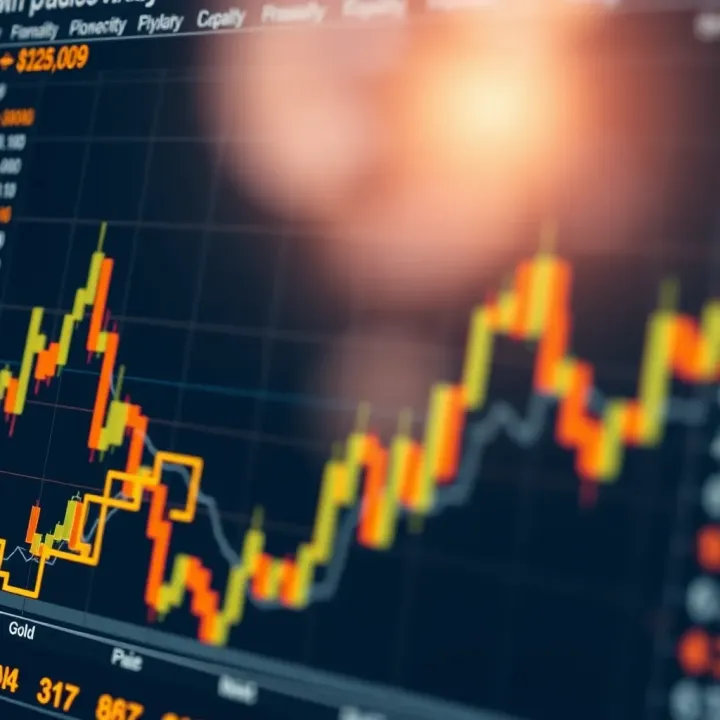
Stay ahead in XAU USD trading 💰 by exploring gold price trends, key drivers, and tech & fundamental analysis tailored for Pakistan's market.
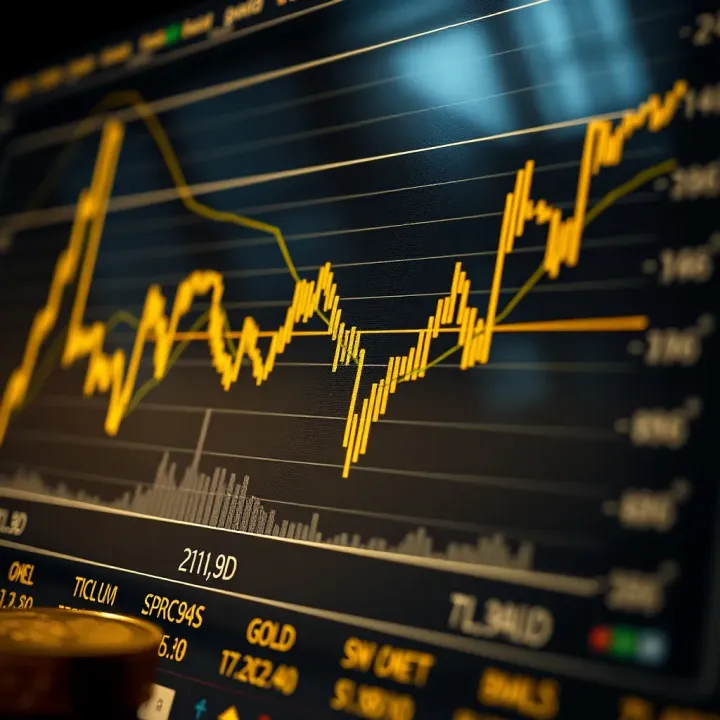
📈 Dive into XAU/USD analysis today! Explore gold price trends, key factors, and expert tips for traders in Pakistan to navigate the market confidently.
Based on 8 reviews