
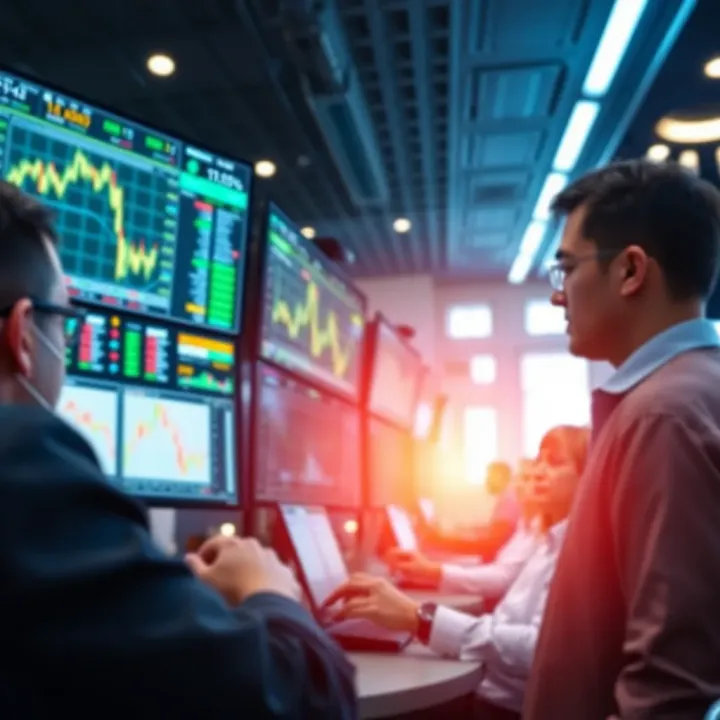
Understanding Trading Chat and Its Role in Market Decisions
📈 Discover how trading chat platforms help Pakistani traders share strategies and insights in real time while managing risks and maximizing gains.
Edited By
Clara Middleton
Derivative peer-to-peer (P2P) markets are changing how investors in Pakistan handle contracts linked to underlying assets like stocks, commodities, or currencies. In these markets, two parties trade derivative contracts directly without involving traditional brokers or exchanges. This setup can reduce transaction costs and speed up trading, making it appealing especially for retail investors and small traders.
Unlike conventional market models, derivative P2P platforms in Pakistan connect buyers and sellers through technology-driven networks, often using mobile or web apps. For example, a farmer in Multan might enter a futures contract directly with an investor in Lahore to lock in a price for wheat months ahead, bypassing intermediaries usually involved in commodity exchange.

Key features of derivative P2P markets include:
Direct counterparty interaction: Traders negotiate terms such as contract size, price, and expiry without middlemen.
Flexible contract structures: Parties can customise derivatives to suit specific investment goals or hedging needs.
Lower fees: Cutting out brokers and clearinghouses often slashes commissions and charges.
However, these markets also bring risks. Lack of a central authority means no guaranteed settlement, raising counterparty risk—if one side defaults, the other may face losses. For example, if a Karachi-based trader fails to honour a derivative contract, the opposite party bears that risk without institutional protection.
Regulation is another challenge. Pakistan’s Securities and Exchange Commission (SECP) currently supervises derivatives mostly through established exchanges. P2P derivative trading platforms operate in a grey area, with evolving policies expected to clarify rules on investor protection, taxation, and reporting.
Investors must carefully assess platform credibility, contract terms, and legal safeguards before engaging in derivative P2P trading.
To sum up, derivative P2P markets in Pakistan offer direct access to futures and options with potential cost benefits and customisation. Still, these come with higher counterparty risks and regulatory uncertainties. As the financial ecosystem matures, better frameworks will likely emerge, opening broader opportunities for Pakistani traders and investors.
Derivative peer-to-peer (P2P) trading is gradually becoming relevant for Pakistani investors seeking direct access to financial products without intermediaries. This form of trading allows individuals to enter derivative contracts directly, bypassing traditional brokerages or exchanges. For active traders and financial analysts in Pakistan, understanding this emerging market setup is critical for spotting new opportunities and navigating its unique challenges.
Definition and types of derivatives: Derivative contracts are financial agreements whose value depends on the price movements of underlying assets such as stocks, commodities, currencies, or indices. Common types include futures, options, forwards, and swaps. For example, a cotton farmer in Multan might use a futures contract to lock in a selling price ahead of the harvest, protecting against price drops.
Role of derivatives in financial markets: Derivatives serve various purposes — they help investors manage risks (hedging), speculate on price changes, or gain access to assets without full upfront investment. In Pakistan's markets, derivatives can provide an additional layer of flexibility, especially in volatile sectors like textiles and energy. This makes them important tools for traders looking to diversify or shield portfolios.
Concept of P2P platforms: Peer-to-peer trading platforms connect buyers and sellers directly, removing traditional middlemen such as brokers or clearinghouses. In the context of derivatives, P2P platforms automate contract execution using smart contracts, which operate on pre-set terms. This method opens opportunities for smaller traders in Pakistan to participate with less capital and fewer entry barriers compared to conventional exchanges.
How P2P differs from traditional trading: Unlike traditional derivative markets where intermediaries manage orders and settlements, P2P trading allows participants to negotiate terms and execute deals autonomously. This can reduce trading costs and delays. However, it also requires stronger trust mechanisms and efficient handling of counterparty risks. For instance, a Karachi-based investor may enter an option contract directly with another individual using a P2P platform, bypassing brokerage fees.
Derivative P2P trading offers practical advantages in lowering costs and improving accessibility. Yet, it demands users stay aware of risks and the regulatory landscape, which continues to evolve in Pakistan.
Understanding how derivative peer-to-peer (P2P) platforms operate is essential to grasp their impact on Pakistan's financial markets. These platforms connect buyers and sellers directly, cutting out traditional intermediaries and enabling efficient, transparent trading of derivative contracts. This direct approach offers practical benefits such as faster trade execution, lower costs, and improved accessibility for individual investors.
In derivative P2P platforms, order placement is straightforward. Traders list their buy or sell orders on the platform, specifying terms like contract size, price, and expiry. The platform then matches these orders directly with counterparties who meet the criteria, enabling real-time execution without the need for brokers or clearing houses. For example, a Karachi-based investor can post an option contract to hedge against currency fluctuations, which another trader in Lahore can accept instantly.
This direct matching streamlines the process, reducing time lags commonly seen in traditional markets. In addition, it allows smaller trades, empowering retail investors who find high minimum volumes on conventional exchanges restrictive.
Smart contracts form the backbone of automation on derivative P2P platforms. These self-executing codes trigger contract terms once preset conditions are met, without manual intervention. For instance, an automated settlement happens when the underlying asset reaches the agreed strike price, releasing funds to the respective parties instantly.
The use of smart contracts reduces reliance on intermediaries and minimises disputes by enforcing transparent, tamper-proof agreements. In Pakistan's context, this is valuable as it curtails delays caused by manual paperwork or verification processes, thereby boosting trust in digital trading.

Privacy and security are critical in P2P trading due to the sensitive nature of financial data. Platforms employ strong encryption protocols such as AES-256 (Advanced Encryption Standard) to safeguard users' transaction details and personal information. Encryption ensures that data remains unreadable during transmission and storage, protecting against cyber intrusions common in digital markets.
On top of that, secure socket layers (SSL) certificates establish encrypted channels between users and the platform, preventing man-in-the-middle attacks. These measures give Pakistani traders confidence that their trades and identities remain confidential.
To maintain platform integrity and comply with Pakistani regulations, robust user identity verification is necessary. Many platforms integrate National Database and Registration Authority (NADRA) checks or validate Computerised National Identity Card (CNIC) details to confirm user identity.
This process prevents fraudulent activities like identity theft and money laundering. For example, a user wanting to trade derivatives on a P2P platform must submit CNIC information, which the platform cross-checks with NADRA's database. This ensures only verified individuals participate, enhancing overall market security and protecting investors from potential scams.
Secure and automated systems allow derivative P2P platforms to operate efficiently while protecting traders in Pakistan's emerging financial ecosystem.
These mechanisms combined demonstrate why understanding the inner workings of derivative P2P platforms is crucial for investors and market professionals looking to navigate this innovative space safely and effectively.
Derivative peer-to-peer (P2P) platforms offer several benefits that can significantly reshape how trading happens in Pakistan’s financial markets. They reduce reliance on traditional intermediaries, opening doors for individual investors by creating a more direct, transparent environment. This section highlights how cost efficiency and greater accessibility make these platforms attractive, especially for retail investors.
One of the main draws of derivative P2P markets is the lower fees and commissions. Traditional markets often involve brokers, clearinghouses, and other middlemen who charge fees at every step. In contrast, P2P trading platforms connect buyers and sellers directly, which slashes extra charges. For example, instead of paying 1% commission to brokers and additional clearing fees, traders might pay a flat small percentage or fixed fee using P2P platforms, reducing overall costs by up to 50% in some cases.
This cost advantage can be quite practical for Pakistani traders, especially those working with modest capital. Lower fees mean a better chance of profits on smaller trades, which is important since many local investors start with Rs 50,000 or less.
Elimination of middlemen also improves cost efficiency and speeds up transactions. Traditional derivative trades require brokers and clearing parties that add layers of approval and delay. P2P platforms operate on an automated system, often using smart contracts, which execute trades instantly once borrower and lender terms match.
Removing middlemen not only cuts fees but also reduces operational risks and paperwork. This helps Pakistani traders who face bureaucratic hurdles in financial services, enabling swifter, more reliable trade settlements.
Derivative P2P platforms lower barriers to entry for individual investors significantly. In Pakistan, traditional derivatives markets often require high minimum capital and complex documentation, which limits participation mostly to institutional players or high-net-worth individuals. P2P trading platforms allow investors to join with less capital and simpler account setups, including mobile-based accessibility.
For instance, a retail trader in Lahore can open a P2P trading account using CNIC verification on a mobile app within days, without the lengthy verifications needed in conventional setups. This inclusiveness promotes wider participation across Pakistan’s urban and suburban areas.
Offering the opportunity for smaller trades is a related benefit. Conventional derivative markets usually operate with large contract sizes, which can deter smaller investors. P2P platforms often allow fractional trading or micro-contracts tailored to user preferences.
This feature enables a trader with Rs 20,000 to participate, which was rarely possible before. It also encourages experimentation by new traders who want to learn without risking large amounts, fostering financial literacy and gradual market entry.
These elements combined make derivative P2P platforms a promising avenue for Pakistan’s financial inclusion agenda by making sophisticated financial products more reachable for ordinary investors.
In short, cost savings from fewer fees and the removal of intermediaries, along with wider access for retail investors, make derivative P2P platforms practical and appealing alternatives to traditional derivatives trading within Pakistan.
Derivative P2P markets offer exciting opportunities, but they come with risks that investors cannot ignore. Understanding these risks and the regulatory landscape around them is essential for anyone planning to enter Pakistan’s derivative P2P scene. Clear knowledge helps you manage exposure and avoid pitfalls, especially when trading involves direct counterparties and fluctuating asset values.
In derivative P2P trading, counterparty risk means the possibility that the party on the other side might default on its obligations. Since P2P platforms directly connect buyers and sellers without traditional intermediaries like brokers or clearinghouses, this risk stands out sharply. For example, if a seller fails to deliver the asset or settle losses during unfavourable market moves, the buyer faces financial loss.
This risk is particularly relevant in Pakistan, where many P2P platforms are still evolving, and creditworthiness checks of traders can be limited. While escrow services and smart contracts provide some safeguards, they can't eliminate all risk of default or fraud. Traders should assess the reputation and reliability of their counterparties and consider platform safeguards before making deals.
Derivative contracts often track underlying assets that can be quite volatile, such as shares listed on the Pakistan Stock Exchange (PSX) or commodities like oil and gold. This volatility can lead to rapid swings in contract values, sometimes within minutes.
In the P2P model, without the buffer of a central clearinghouse, sudden price drops or spikes can cause margin calls that are harder to enforce. If one party can't meet its margin requirements due to unexpected market swings, the other party may suffer losses or delayed settlement. This issue highlights the need for traders to keep close watch on market conditions and use risk controls like stop-loss orders when possible.
Pakistan’s legal framework for derivative trading remains somewhat limited, especially concerning P2P models. While the Securities and Exchange Commission of Pakistan (SECP) regulates derivatives traded on formal exchanges like the PSX, P2P derivative platforms operate in a legal grey area.
These platforms are typically not subject to comprehensive licensing and oversight yet. The lack of clear guidelines creates uncertainty for traders and may discourage institutional participation. Without formal investor protections and dispute resolution mechanisms, risks increase, especially for retail investors.
To build trust and stability, Pakistan needs clearer regulations tailored to derivative P2P markets. Key steps include:
Defining licensing requirements for P2P derivative platforms to ensure operational standards.
Mandating transparent disclosures about counterparty risks and trading terms.
Establishing a dispute resolution framework for contract enforcement.
Encouraging use of escrow and verified settlement processes.
Promoting investor education on the risks involved.
These measures would reduce fraud and defaults, making the market safer and more attractive for traders. Until these protections are in place, investors must exercise caution and thoroughly vet platforms and trading partners before committing funds.
Understanding both the risks and the legal framework is vital. It lets you navigate derivative P2P markets confidently, minimise exposure, and spot trustworthy platforms.
By staying informed and cautious, traders and investors in Pakistan can participate in derivative P2P markets responsibly, leveraging their benefits with eyes wide open to challenges.
The future of derivative peer-to-peer (P2P) platforms in Pakistan looks promising as these systems start attracting greater attention within financial circles. This section highlights key opportunities and technological trends that could shape how P2P derivatives evolve, offering practical benefits for traders, investors, and financial analysts alike.
Aligning derivative P2P platforms with the Pakistan Stock Exchange (PSX) could significantly enhance market efficiency and liquidity. PSX integration means P2P participants might directly trade derivative contracts tied to PSX-listed assets without relying on traditional intermediaries. This not only trims down costs but also streamlines settlement processes, making the entire ecosystem more user-friendly. For example, a retail investor in Lahore could enter a derivative contract on a KSE-100 index future via a P2P platform connected to PSX, bypassing brokers and reducing fees.
Moreover, PSX’s involvement could provide standardised regulatory oversight, which boosts investor confidence. This integration can serve as a bridge that brings otherwise hesitant investors into formal markets, knowing their trades benefit from established exchange rules and protections.
Derivative P2P platforms have a unique role in extending access to sophisticated financial instruments beyond traditional urban centres and affluent investors. Many Pakistanis remain outside formal investment channels due to high fees, limited knowledge, or geographic barriers. P2P trading can lower these hurdles by offering simpler onboarding and smaller contract sizes, suitable for individual investors with modest capital.
Think of a middle-class trader in Faisalabad or Quetta who could start trading derivatives via a mobile-enabled P2P platform without needing hefty deposits or navigating complex brokerage systems. This approach democratizes investment opportunities, potentially leading to a more financially inclusive environment that supports wealth creation across different socioeconomic groups.
Blockchain technology plays a critical role in securing transactions and ensuring transparency within P2P derivative markets. By recording contract terms and trade execution on an immutable ledger, blockchain reduces fraud and counterparty risks. Pakistani fintech startups leveraging blockchain ensure contracts execute automatically once agreed conditions meet, cutting down disputes.
Artificial Intelligence (AI) supports these platforms by improving risk assessment and price discovery. Algorithms can analyse market data quickly to offer real-time pricing, helping traders make informed decisions even with limited market experience. For instance, AI-powered chatbots could guide new users on derivative features or manage portfolio risks dynamically.
Widespread smartphone use in Pakistan enables P2P derivative platforms to reach a broader audience via dedicated mobile apps. These apps offer users the convenience to place orders, track positions, and receive alerts anywhere, anytime. This mobile-first approach fits local realities where many investors rely on mobile internet rather than desktop connections.
Platforms that optimise user experience for low bandwidth and small screens find higher adoption in smaller cities and rural areas. The ease of access helps maintain active participation and grows trading volume, which in turn supports more efficient price formation and market depth.
The growth of derivative P2P markets in Pakistan hinges on thoughtful integration with existing financial systems and smart use of technology, opening doors for more investors to engage confidently and efficiently.
This outlook shows that Pakistan’s derivative P2P landscape is far from static; its expansion depends on balancing regulation, fintech innovation, and user-centred accessibility. Understanding these aspects will help investors and market professionals prepare for shifts in how derivatives trade and contribute to Pakistan’s evolving financial markets.
📈 Discover how trading chat platforms help Pakistani traders share strategies and insights in real time while managing risks and maximizing gains.

Explore Urdu's rich history and cultural role in Pakistan 🇵🇰, its educational impact 📚, challenges today, and its future in a diverse society 🌍.

📊 Learn how margin works in trading, understand risks, margin calls, and boost your buying power safely in Pakistan’s markets with expert tips.
📈 Dive into CFDs trading in Pakistan! Learn how CFDs work, spot risks, pick brokers, and get practical tips for smart, responsible trading.
Based on 9 reviews