

Understanding Trading CFDs: A Practical Guide
📈 Dive into CFDs trading in Pakistan! Learn how CFDs work, spot risks, pick brokers, and get practical tips for smart, responsible trading.
Edited By
Matthew Collins
Contracts for Difference (CFDs) let traders in Pakistan speculate on the price movements of assets like stocks, commodities, currencies, and indices without owning the actual asset. Instead of buying shares directly from the Pakistan Stock Exchange (PSX) or physical goods, CFD traders enter contracts with brokers to profit from price changes.
CFDs work by settling the difference between the opening and closing prices of a trade. For instance, if you expect the price of Oil futures to rise, you can open a ‘buy’ CFD position. If Oil moves from $85 to $90, you gain the difference ($5) multiplied by your contract size. However, if the price falls, you face a loss of that difference. This mechanism provides flexibility, as you can also ‘sell’ CFDs to benefit from falling prices.

Several aspects make CFDs appealing to Pakistani traders:
Leverage: Brokers typically offer leverage, allowing traders to control larger positions with a smaller capital outlay. For example, with 10x leverage, Rs 10,000 can control Rs 100,000 worth of assets. While this magnifies profit potential, it also increases risk.
No ownership hassles: Since you don’t own the underlying asset, there are no concerns about physical delivery, paperwork, or custody fees.
Access to multiple markets: CFDs open opportunities to speculate on international stocks, indices like the Dow Jones or FTSE, commodities such as gold and oil, and currency pairs all from a single trading platform.
That said, CFDs carry risks. Market volatility can lead to rapid gains but also steep losses, especially with leverage. Margin calls and liquidation risk is real if the market moves unfavourably. Understanding broker terms, spreads, commissions, and regulatory safeguards in Pakistan is crucial before trading.
CFD trading demands informed decisions and strict risk management. Without this, inexperienced traders can quickly lose capital.
For Pakistani investors seeking exposure beyond the PSX or who want to diversify without hefty capital, CFDs offer a practical tool. But it’s important to learn the mechanics, weigh risks, and choose regulated brokers operating under Pakistan’s financial laws.
Contracts for Difference (CFDs) have become popular among investors and traders in Pakistan looking for flexible exposure to financial markets without owning the underlying assets. Understanding CFDs is important because they provide opportunities to profit from price movements in international stocks, currency pairs, commodities, and indices without the need for large capital outlay. For example, a trader in Karachi can speculate on the rise or fall of the US S&P 500 index without buying any US shares directly.
Knowing the basics of CFDs helps you grasp how leverage, margin, and risk management work, which are crucial in markets with frequent price swings. This introduction sets the stage by explaining what CFDs are, how profits and losses are calculated, and the common types that Pakistani traders can access through brokers.
Difference between owning assets and CFDs
Owning an asset means you hold the actual financial instrument, like shares of a company or physical commodities. CFDs, by contrast, are contracts that mirror the price changes of these assets without transferring ownership. For instance, when you buy shares of a company on the Pakistan Stock Exchange, you become a shareholder with rights like dividends. However, trading a CFD on the same stock means you do not own the shares but agree to settle the difference in price movements with your broker.
This distinction matters practically because CFDs allow you to access markets with much lower investment. You can open positions worth Rs 1 crore in a stock using a fraction of that amount as margin, leveraging your capital. Conversely, traditional investment requires full payment for the shares.
How profit and loss are calculated
Profits and losses in CFD trading depend on the price difference between when you open and close a position multiplied by the number of contracts. For example, if you buy a CFD on a stock priced at Rs 100 and close it when the price goes up to Rs 110, your profit is Rs 10 per contract, before fees. However, if the price drops to Rs 90, you face a loss of Rs 10 per contract.
Because CFDs work on price changes rather than ownership, you can profit from falling markets by selling CFDs without owning the asset. But losses can also multiply quickly, especially when using leverage, making it vital to monitor positions carefully.
CFDs on stocks and indices
Stock CFDs represent price movements of individual company shares listed on global exchanges like NYSE, NASDAQ, or even Pakistan Stock Exchange through select brokers. Index CFDs track whole market indices such as the S&P 500 or the Karachi Stock Exchange’s KSE-100. Many Pakistani traders prefer index CFDs for broader market exposure without picking single stocks. For example, during times of political uncertainty, trading the KSE-100 index CFD could offer a way to hedge or speculate on overall market sentiment.
Forex CFDs
Forex CFDs let traders speculate on currency pairs like USD/PKR, EUR/USD, or GBP/PKR. The forex market is one of the world’s largest, and CFDs provide the ability to trade these pairs in Pakistan without actually exchanging physical currencies. For instance, if a trader expects the US dollar to strengthen against the Pakistani rupee, they can buy a USD/PKR CFD, profiting as the exchange rate rises. This offers flexibility especially when local regulations limit direct foreign currency trading.
Commodity CFDs
Commodity CFDs include metals like gold and silver, energy products such as oil, and agricultural goods like wheat or cotton. Such CFDs provide an indirect way for Pakistani investors to benefit from global commodity price movements without the hassle of storage or physical delivery. For example, a trader betting on rising oil prices may buy an oil CFD to profit from global market trends affecting prices, all through an accessible digital platform.
CFDs provide versatile ways to participate in global financial markets with relative ease, but understanding their basics is key to using them effectively and responsibly.
This introduction clarifies the fundamental concepts of CFDs, which is vital for any Pakistani trader or investor considering this approach. It highlights how CFDs can expand trading options while underlining the need for sound knowledge of profit/loss mechanisms and accessible asset types.
Understanding how CFD trading operates is key for anyone interested in using this financial instrument in Pakistan. CFDs allow you to speculate on price movements of assets without owning them. Knowing how to open and close positions, as well as how pricing works, helps you manage risks and grasp potential profits.
In CFD trading, opening a position means entering a trade, either by buying or selling, while closing means exiting that trade to realise profits or losses. You can take either a long or short position. Going long means you expect the asset's price to rise; you buy the CFD hoping to sell later at a higher price. Conversely, going short means you believe the price will fall; you sell the CFD first and aim to buy it back cheaper.
For example, if a Pakistani trader believes the KSE-100 index will drop, they may open a short CFD position on it. If the index indeed falls, they profit from the difference between opening and closing prices without owning actual shares.
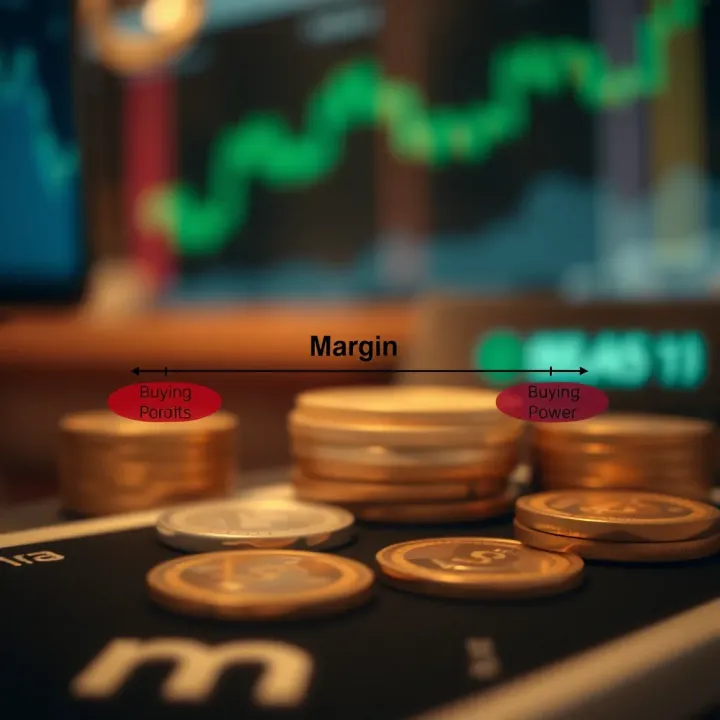
CFDs offer leverage, meaning you only need to put up a fraction of the full trade value, called the margin. This boosts your buying power but also increases risk. For instance, a leverage of 10:1 means you can control Rs 100,000 worth of CFDs by depositing Rs 10,000 as margin.

While leverage can magnify gains, losses are also magnified and can exceed your initial margin if the market moves against you. Therefore, margin requirements and risk management are crucial when trading CFDs.
Bid and ask prices define the trading price range. The bid price is what buyers offer to pay, while the ask price is what sellers want. The difference between these prices is the spread.
For example, if a forex CFD is quoted at Rs 160 bid and Rs 161 ask, the spread is Rs 1. You buy at the higher ask price and sell at the lower bid price, which means your trade starts with a small loss equal to the spread.
The spread effectively represents your initial cost and reduces profits if not considered carefully. Narrow spreads help traders enter and exit without paying much extra, but wider spreads increase trading costs and can eat into gains, especially for frequent traders.
In Pakistan’s CFD market, spreads vary by instrument and broker. For instance, popular stock CFDs might have tighter spreads compared to more volatile commodities. Understanding this helps traders choose the best instruments and manage expenses efficiently.
Mastering these basics—positions, leverage, pricing, and spreads—is essential for Pakistani traders to navigate CFD trading confidently and avoid surprises.
CFD trading offers several practical benefits, especially for Pakistani investors looking to diversify and optimise their trading strategies. These advantages stem mainly from the flexibility and broad market access CFDs provide, allowing traders to engage in global financial markets without major capital hurdles.
Trading international stocks from Pakistan opens up opportunities beyond the local market, which can sometimes be limited in liquidity or variety. With CFDs, investors can speculate on shares of major companies listed on the New York Stock Exchange, London Stock Exchange, or Tokyo Stock Exchange. This broad access allows Pakistani traders to benefit from global economic growth or sector-specific trends. For example, a trader in Karachi could take a position on Apple or Tesla shares without needing to open foreign brokerage accounts, easing currency and regulatory hurdles.
Availability of commodities and indices is another plus point. CFDs on commodities such as gold, crude oil, and agricultural products enable investors to participate in price movements in markets that directly affect Pakistan’s economy and households. Indices like the S&P 500 or FTSE 100 provide exposure to entire market segments, reducing risk compared to single-stock speculation. This diversification helps in balancing risks and capitalising on different economic cycles internationally.
Potential for higher returns comes from leverage, which lets traders control a large position with a relatively small amount of capital—called the margin. In Pakistan, where investment capital might be limited, leveraging can multiply profits if markets move favourably. For example, with margin requirements around 5-10%, a Rs 100,000 investment might give exposure worth Rs 1 million or more. That said, leverage also increases risk, so careful risk management is vital.
Ability to trade rising and falling markets is a distinct feature of CFDs. Traders can open long (buy) positions if they expect prices to rise or short (sell) positions if they anticipate a downturn. This flexibility is especially useful in volatile environments, allowing Pakistani traders to profit even when markets falter, which traditional buy-and-hold strategies can’t achieve easily.
By offering access to various global markets and enabling flexible strategies with leverage, CFDs provide Pakistani investors practical tools to expand their trading horizons without heavy capital or ownership constraints.
This combination of wide market access, leverage, and the ability to profit in both directions makes CFD trading attractive and applicable for many traders in Pakistan aiming to improve their portfolio performance or diversify risk.
Trading Contracts for Difference (CFDs) comes with notable risks that traders in Pakistan must understand well before getting involved. This section highlights the key challenges, focusing on market volatility, loss potential, and issues around regulations and broker integrity.
CFDs offer leverage, meaning you can control a larger position than your actual capital. While this magnifies gains, it also increases losses proportionally. For example, if you use 10:1 leverage and the market moves against you by 5%, your loss would be 50% of your invested amount. In the Pakistani context where market movements, especially in forex or commodities, can be sudden, this impact is significant and requires cautious risk management.
Price gaps and slippage add another layer of challenge. Price gaps happen when the market opens at a different price than where it closed due to overnight events or news — this can mean sudden losses without the chance to exit at expected prices. Slippage refers to the difference between the order execution price and the expected price, often seen during volatile periods. For instance, during major economic announcements affecting the rupee or oil prices, slippage might cause the execution price of your CFD trade to be less favourable, raising potential losses.
Choosing a regulated broker is critical for Pakistani traders to safeguard their investments. SECP (Securities and Exchange Commission of Pakistan) has yet to fully regulate CFDs, so most brokers are international. Selecting brokers regulated by recognised bodies like the FCA (UK Financial Conduct Authority) or CySEC (Cyprus Securities and Exchange Commission) reduces risks of unfair trading practices or fund mismanagement.
Unfortunately, scams and frauds are a real danger in Pakistan’s growing online trading space. Some unregulated firms promise unrealistic returns with CFDs and disappear once they collect client funds. Pakistani traders should verify broker legitimacy, avoid platforms without proper licences, and be wary of aggressive marketing tactics. Always conduct due diligence, read reviews, and, if possible, start with demo accounts or small amounts.
Always remember, CFD trading is not a guaranteed way to make fast profits. Understanding and managing these risks protects your capital and helps you trade more confidently in the Pakistani market.
By recognising these risks and selecting trustworthy brokers, traders can navigate CFD trading more responsibly and improve their chances of success.
Understanding the regulatory framework in Pakistan is essential for anyone considering CFDs because it directly affects safety, legality, and trader protection. Unlike fully regulated markets, Pakistan's stance on CFDs remains cautious, so knowing the rules helps investors navigate risks and avoid unregulated entities.
The Securities and Exchange Commission of Pakistan (SECP) has not yet issued comprehensive regulations specifically for CFD trading. While CFDs are widely traded globally, the SECP treats them cautiously due to their speculative nature and associated risks. As a result, Pakistani investors often find themselves dealing with offshore brokers rather than regulated local entities.
This regulatory gap means Pakistani traders should be extra careful and should confirm if a broker holds a valid licence from a recognised international body, like the FCA (Financial Conduct Authority) in the UK, even though these brokers may not be locally regulated by SECP. Understanding this situation helps avoid legal complications or losses from unregulated firms.
Although SECP has no dedicated rules for CFDs, it offers general investor protection measures for capital markets. These include mandatory disclosures, complaint redressal mechanisms, and oversight of brokerage firms operating in Pakistan. However, these protections often do not extend fully to CFD trading when done through offshore platforms.
For example, if a CFD trade through a foreign broker goes wrong, Pakistani authorities have limited power to intervene or recover lost funds. Thus, investors should prioritise brokers with strong compliance records and transparent operations. Staying updated on any new SECP guidelines related to CFDs also helps protect investments.
UK and European regulators have set strict rules around CFDs, notably limiting leverage to protect retail investors and requiring brokers to provide clear risk warnings. These rules reduce the chance of traders losing large sums quickly and ensure better transparency in pricing and execution.
In contrast, Pakistan lacks such strict CFD-specific regulations. This absence means Pakistani traders may encounter brokers offering very high leverage with fewer safeguards. While this may seem attractive at first, it raises the risk of rapid and significant losses. Also, local legal protections found in the UK or Europe don’t apply here, so it is a more uncertain environment.
Pakistani traders should focus on choosing brokers regulated by trustworthy international authorities, check reviews, and understand all fees and risks before trading. Since SECP does not regulate offshore CFD brokers, due diligence becomes the trader's responsibility to avoid scams or hidden costs.
Moreover, traders should be cautious about leverage levels and margin calls. Excessive leverage can wipe out capital quickly, especially in volatile markets common to CFDs. Monitoring trading behaviour, using stop-loss orders, and limiting exposure can help manage these risks effectively.
Traders in Pakistan must stay vigilant and prefer brokers that uphold international compliance standards, secure transactions, and clear communication to safeguard their capital when dealing with CFDs.
In summary, while the regulatory framework for CFDs in Pakistan is still evolving, informed traders can reduce risks by understanding SECP’s position, comparing international regulations, and choosing brokers prudently.
Starting CFD trading in Pakistan requires careful planning and understanding of the local regulations and market conditions. Given the unique challenges Pakistani traders face, such as regulatory uncertainties and limited access to certain international brokerage services, this section guides you through the essential steps for successful CFD trading. From choosing the right broker to practical trading strategies, these foundations help you navigate the CFD landscape confidently.
Choosing the right broker is the first step in CFD trading. Look for brokers regulated by recognised authorities like the Financial Conduct Authority (FCA) or the Cyprus Securities and Exchange Commission (CySEC), which offer greater investor protection. Also, consider brokers that support Pakistani traders through localised services, competitive spreads, and efficient customer support. A good broker will provide clear information about fees, margin requirements, and the ability to trade multiple asset classes.
Popular international brokers accessible from Pakistan include IG, PLUS500, and eToro. These platforms offer user-friendly interfaces and diverse CFDs on stocks, commodities, indices, and forex. Additionally, they accept Pakistani clients and support funding through various channels. However, always verify the current regulatory status and client reviews to avoid scams, which are unfortunately common in unregulated sectors.
Opening a CFD trading account generally requires submitting identification such as a Computerised National Identity Card (CNIC) and proof of address. Some brokers might also ask for bank statements or income proofs to comply with anti-money laundering rules. It usually takes a few days to get approved once documents are submitted correctly.
Funding your account has become easier with the rise of local payment methods. Many brokers now accept deposits through JazzCash and Easypaisa, allowing Pakistani traders to fund their accounts without costly international bank transfers. This brings convenience and speed, especially for small to medium investors. Always check deposit fees and withdrawal policies to avoid unexpected charges.
Effective risk management is at the heart of CFD trading. Techniques like setting stop-loss orders to limit potential losses and proper position sizing help control risk. For instance, risking no more than 2% of your trading capital on a single trade is a common practice to preserve funds during volatile markets.
For beginners, simple strategies such as trend-following or breakout trading work well. These involve identifying asset price directions or when prices move outside a defined range, signalling entry or exit points. Using demo accounts provided by brokers can help practice these strategies without risking real money while you get familiar with how CFDs move.
A disciplined approach in selecting brokers, managing funds, and applying straightforward strategies is the best way to begin CFD trading in Pakistan.
📈 Dive into CFDs trading in Pakistan! Learn how CFDs work, spot risks, pick brokers, and get practical tips for smart, responsible trading.

📊 Understand trading brokers in Pakistan: their roles, types, fees, regulations, and key tips to pick a trustworthy broker for safer financial trades.

Find the best trading app for Pakistan 📱 Explore key features, top picks, regulations, and tips tailored for Pakistani traders to trade smart and safe 🇵🇰
📊 Learn how margin works in trading, understand risks, margin calls, and boost your buying power safely in Pakistan’s markets with expert tips.
Based on 8 reviews