
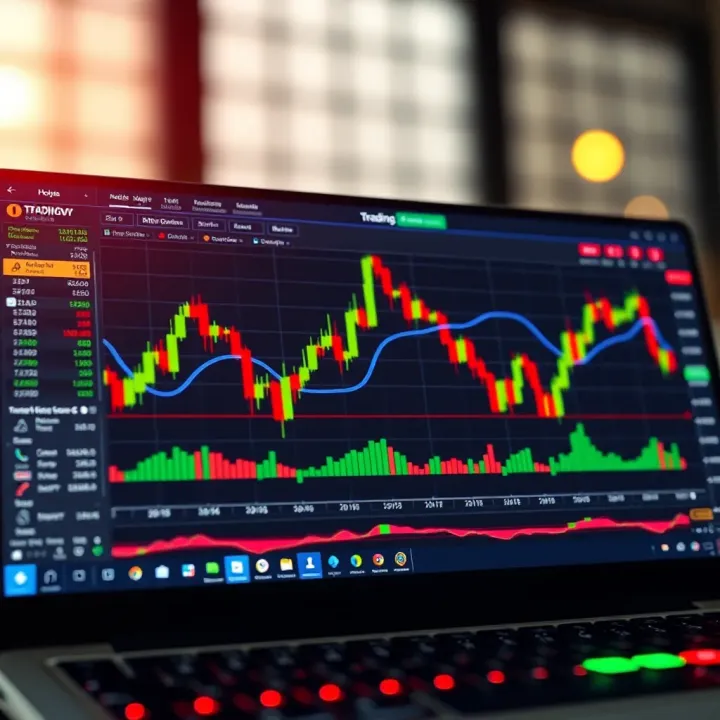
Binary Options Trading with TradingView Tools
Discover how to use TradingView's charts and tools for smarter binary options trading 📈. Learn strategies, risks, and tips tailored for traders in Pakistan and beyond.
Edited By
Harry Wilson
Binary trading has become an appealing method for traders looking to make quick decisions based on market movements, especially in Pakistan where digital trading platforms are gaining traction. Unlike traditional trading, binary options offer just two outcomes — a trade either results in a fixed profit if the prediction is correct or a total loss if wrong. This all-or-nothing structure simplifies decision-making but also demands precise timing and market understanding.
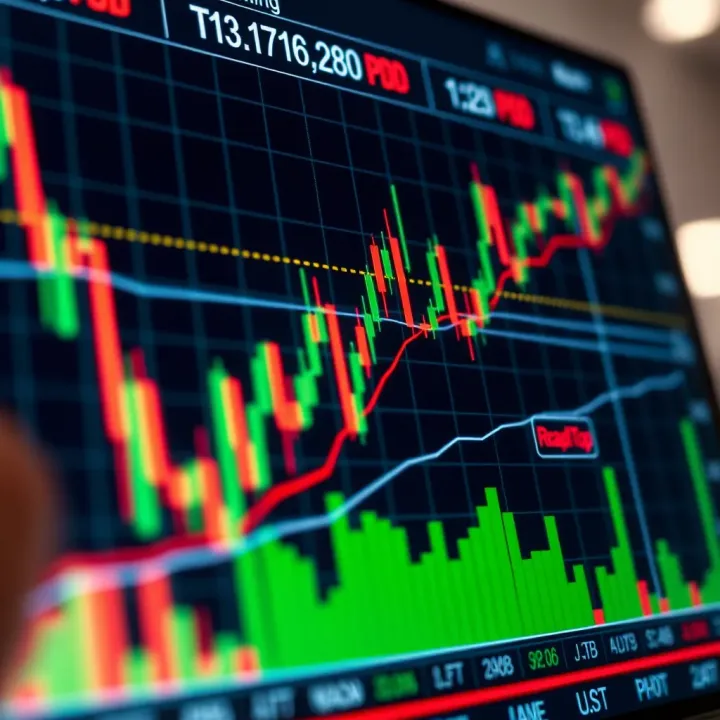
TradingView is primarily known as a powerful charting and analysis platform. It does not provide direct binary options trading but supports traders by offering a detailed visual representation of price movements and technical indicators. Pakistani traders can use TradingView to scrutinise market trends, identify entry and exit points, and backtest strategies before placing trades on a binary options broker.
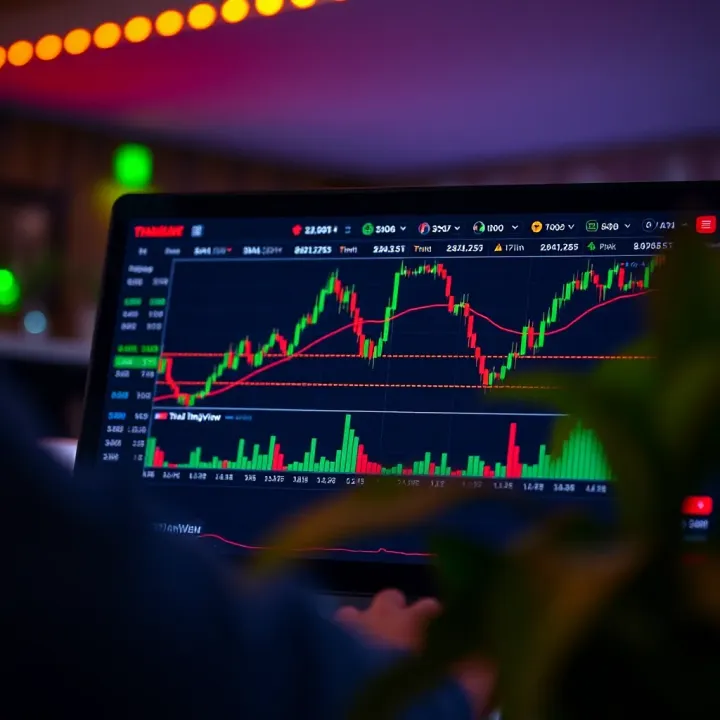
Key features on TradingView that help with binary trading include:
Customisable charts: Traders can adjust timeframes and overlays to match the expiry times common in binary trading.
Technical indicators: Moving averages, RSI, Bollinger Bands, and others aid in spotting market sentiment shifts.
Alerts system: Notifications on price levels or indicator signals allow timely decisions without constant screen monitoring.
Community scripts and strategies: Access to user-generated resources can offer fresh perspectives or tested methods to robustify your trading approach.
Successful binary trading on TradingView hinges on combining accurate analysis with disciplined risk management. Given the volatile nature of short-term options, controlling exposure is as vital as forecasting correctly.
In the Pakistani market context, where internet speed and load-shedding might interrupt trading sessions, setting alerts and preparing strategies in advance is especially helpful. Moreover, understanding local economic announcements, such as SBP policy rate changes or Karachi Stock Exchange movements, can improve timing and choice of trades.
This guide will explore practical ways to harness TradingView for binary trading, elaborate on strategy development, and offer risk control tips customised for Pakistani conditions.
Binary trading serves as the foundation for this guide, bringing clarity to how traders make straightforward predictions on market movements. In Pakistan, where many retail investors seek quick yet manageable entry points into financial markets, understanding binary trading becomes especially relevant. This introductory section lays out the mechanics and distinct characteristics of binary options, providing readers with practical tools to navigate the trading environment confidently.
Definition and basic mechanics: Binary trading involves forecasting whether the price of an underlying asset—such as a stock, commodity, or currency pair—will rise or fall within a specific timeframe. Traders do not own the asset itself. Instead, they wager on a yes/no proposition: Will the asset's price be above or below a certain strike price when the option expires? If the prediction is correct, the trader earns a fixed payout; if wrong, the investment is lost. For example, a trader predicting that the price of the US dollar against the Pakistani rupee will rise by 5 pm PKT today can place a binary option accordingly.
This simplicity makes binary trading appealing, especially for newcomers seeking clear risk and reward scenarios without dealing with complex leverage or margin.
How binary trading differs from traditional trading: Unlike traditional trading, where profits vary based on price movement size, binary trading offers fixed profits or losses. Traditional traders might buy shares or currencies expecting prices to move favourably and gain or lose proportionally. Binary traders, on the other hand, focus only on direction within an expiry period without concern for the magnitude of change.
This fixed-return structure reduces exposure to unpredictable price swings but also caps profits. In traditional Pakistani markets like the Pakistan Stock Exchange (PSX), investors often hold shares for dividends and capital gains, while binary trading limits positions to short-term bets, often lasting minutes or hours.
Growing interest among retail traders: Over recent years, binary trading has attracted many individual investors in Pakistan due to its ease of access via online trading platforms and mobile apps. Low initial investments and clear risk boundaries appeal to traders wanting to test markets without a heavy capital commitment. For instance, platforms accessible through smartphones allow users even in smaller cities like Multan or Peshawar to try binary options alongside traditional market trades.
The trend is noticeable among younger demographics, who look for active trading styles that promise fast results, especially when conventional stock market participation can seem daunting or slow-moving.
Regulatory environment overview: However, binary trading in Pakistan travels on uncertain regulatory ground. The Securities and Exchange Commission of Pakistan (SECP) oversees traditional securities but has limited direct control over cross-border binary brokers. This leaves many Pakistani traders exposed to unregulated or offshore operators, increasing risks of fraud.
The State Bank of Pakistan (SBP) also issues warnings against certain unlicensed financial products, urging traders to carefully verify broker licenses. Thus, while the demand for binary trading grows, awareness of the regulatory environment remains essential to avoid scams and penalties.
Understanding these dynamics helps Pakistani traders approach binary trading with informed caution, selecting trustworthy platforms and managing their funds responsibly.
The next sections will explore how TradingView supports binary trading through useful tools and strategies tailored to Pakistan’s market context.
TradingView is not just another charting platform; it has become a pivotal tool for binary traders globally, including many in Pakistan. Its relevance lies in offering intuitive charts, real-time data, and an extensive array of technical analysis tools that can significantly improve trade timing and decision-making accuracy.
For binary trading, where outcomes hinge on price movements within tight time frames, TradingView’s precise and customisable charts offer a distinct edge. Pakistani traders benefit from its ease of use alongside advanced features like drawing tools and multi-timeframe analysis, letting them craft strategies suited to the highly speculative nature of binary options.
TradingView provides an extensive range of chart types, including candlestick, bar, and Heikin Ashi charts, which help traders spot market trends quickly. Its cloud-based setup means you can access your charts across devices—very handy for busy traders in Karachi or Lahore who need to check the markets on the go.

Moreover, TradingView supports custom indicators and scripting through its Pine Script language. This lets traders develop or use existing strategies tailored specifically for binary options, such as volatility breakout strategies or momentum-based setups, without needing extra software.
The platform offers near-instant, live price updates across global and local markets, including Pakistan Stock Exchange (PSX) indices and currency pairs. This immediacy helps traders act on short-term price fluctuations, which are critical in binary options where trade expiry can be as short as 60 seconds.
Users can seamlessly switch between multiple timeframes—seconds, minutes, hours—getting a finer grasp on price behaviour. This ability to zoom in or out on chart data supports making informed entry and exit decisions that suit the particular binary option being traded.
Indicators on TradingView, such as Relative Strength Index (RSI), Moving Averages, and Bollinger Bands, are vital for spotting overbought or oversold conditions. For example, a trader might set custom RSI thresholds to signal when to enter a binary trade anticipating a price reversal.
Custom scripts written in Pine Script enable users to automate parts of their analysis. Pakistani traders can either code their own or adapt open-source strategies tailored for trending or ranging markets. This helps in reducing the guesswork and emotional bias often detrimental in binary trading.
TradingView’s alert system is particularly useful for binary traders who need timely notifications. Alerts can be set based on price levels, indicator values, or pattern completions. Suppose you want an alert when the EUR/USD pair crosses a specific moving average; TradingView will ping you immediately via app or email.
Such alerts ensure you never miss a potential trading opportunity, especially in a fast-moving market. This feature also supports risk management by notifying you of stop-loss or take-profit levels being breached, which is crucial for protecting capital in binary options trading.
Effective use of TradingView’s features can be a game-changer in binary trading, providing clarity, speed, and precision for your trades. Whether it’s the real-time charts or custom alerts, leveraging its tools smartly helps build confidence and control in the highly volatile binary options market.
TradingView offers a suite of tools that are essential for binary traders looking to make precise and informed decisions. These tools focus on technical analysis and visual annotations, enabling traders to identify patterns and signals crucial for timing their trades. Using these features effectively can improve your win rate by helping you spot entry and exit points more confidently.
Candlestick patterns and chart types are the backbone of technical analysis on TradingView. Candlestick charts display price movements with a clear visual format showing the open, close, high, and low prices over a set period. For binary trading, recognising patterns such as Doji, Hammer, or Engulfing candlesticks helps predict short-term price direction, which is critical since binary options work on fixed expiry times.
Besides candlesticks, TradingView supports other chart types like line and bar charts, but candlesticks tend to offer richer detail for spotting reversals and continuations. For example, a Hammer appearing near a support level could hint at a price bounce, making a "Call" option more attractive. Your focus should be to combine candle patterns with volume and other indicators rather than rely on a single signal.
Popular indicators for binary options include Moving Averages (MA), Relative Strength Index (RSI), and Bollinger Bands. These indicators help you gauge market momentum, overbought or oversold conditions, and potential volatility changes, all factors influencing price moves within short expiry periods.
For instance, when RSI crosses above 70, it signals that the asset might be overbought, indicating a possible downturn, which aligns well with a "Put" option in binary trading. Similarly, moving averages can confirm trends or signal reversals when shorter-term MAs cross longer-term ones. Tailoring these indicators on TradingView to your preferred time frames can complement your binary trading strategy efficiently.
Trendlines, support and resistance levels drawn on charts are indispensable for spotting price barriers where trends may pause or reverse. TradingView lets you place these lines easily, assisting you in outlining zones where the price is likely to react.
For example, if the price repeatedly fails to break above a certain level, that becomes a resistance area. Planning a "Put" option near this resistance can be profitable. On the flip side, a clear support level provides opportunities to place "Call" options, anticipating a bounce. These visual guides provide clarity and reduce guesswork, which binary trading notoriously suffers from.
Marking entry and exit points on TradingView allows you to document your trade ideas and review your strategies. Using icons, text notes, and arrows, you can pinpoint where you plan to enter a trade and where to take profits or cut losses.
This practice keeps you disciplined and helps you learn from past trades. For instance, if you mark several entries that coincided with strong support zones but were ignored, you build a pattern that boosts your confidence for future trades. Such annotations on charts also make post-trade analysis smoother, which is key for improving binary trading skills over time.
Using TradingView’s technical and drawing tools effectively means you’re not just guessing but basing your binary trades on structured analysis. This reduces risk and sharpens your trading edge.
Risk management is key for binary trading on TradingView, especially because of the all-or-nothing payout structure. Effective risk control helps you avoid heavy losses while maintaining steady progress. Without it, you may risk blowing your capital fast — a pitfall many new traders face. Keeping a disciplined approach to risk ensures you trade smarter, not just harder.
One crucial rule is to set a fixed investment per trade rather than chasing profits by increasing stakes randomly. For example, if you have a trading budget of Rs 50,000, limit each trade to around 1-2% of your capital. This means risking Rs 500 to Rs 1,000 per trade no matter how confident you feel. By doing so, you protect your account from significant draws and stay in the game longer.
This fixed investment approach stops emotional trading caused by huge wins or losses. Overexposing your capital on a single trade often backfires, especially in binary options where the outcome is binary — you either win a set amount or lose your stake. Sticking to a small, consistent investment helps smooth out volatility and gives you better control.
Demo accounts offered by platforms or brokers are invaluable for practising binary trading without risking real money. They provide real-time charts and execution conditions similar to live markets but use virtual funds. This practice helps you understand TradingView’s charting tools and test strategies effectively.
For instance, you can use a TradingView demo to try different indicators or set alerts without feeling the pressure of losing capital. Also, you can experiment with entry and exit timing. Once confident, you can transition to real trading with more assurance and a clearer plan.
The binary trading world has unfortunately seen many scams and shady brokers, especially targeting inexperienced traders. Avoiding these is crucial for your capital’s safety. Always choose brokers regulated by recognised authorities and verify their reputation through user reviews and forums.
Watch out for brokers promising guaranteed returns or pressuring you to deposit more money. Realistic expectations are key. If a broker doesn't offer straightforward terms or customer support, consider it a red flag. Using established platforms integrated with TradingView can reduce exposure to dubious operators.
Binary trading’s fast pace often stirs emotions — excitement after wins and frustration after losses. This emotional roller-coaster can lead to impulsive decisions like overtrading or abandoning your plan. Keeping emotions in check through discipline is vital.
A practical way is to set daily loss limits. If you hit the limit, stop trading for the day to prevent chasing losses blindly. Maintaining a trading journal where you note reasons for each trade and feelings helps develop self-awareness and better decision-making. Remember, consistent profits come from calm, controlled trading, not quick reactions.
Managing risk is not just a safety net; it's the foundation for long-term success in binary trading. Without solid risk control, even the best strategy can fail.
Adopting these risk management techniques — fixed investments, using demo accounts, identifying trustworthy brokers, and controlling emotions — can sharpen your trading edge on TradingView. This leads to sustainable gains rather than quick, risky bets that harm your account balance.
Trading binary options effectively requires more than just understanding charts or signals. In Pakistan's unique financial landscape, practical advice tailored to local realities is key, especially regarding broker selection and market data utilisation. This section provides actionable tips for traders to navigate binary trading smarter and safer.
Selecting the right broker is one of the most important steps in binary trading. Traders should prioritise brokers offering transparent pricing, quick execution, and strong customer support. Features like clear information on withdrawal procedures and accessible account management go a long way in building trust. For example, brokers with a good reputation for timely payouts and minimal disputes are easier to work with.
Equally important are the educational resources and demo accounts provided. A broker offering practice accounts allows you to test your strategies without risking real money. Compare different brokers’ trading platforms: user-friendly interfaces tailored for binary options can improve your trading speed and accuracy.
Pakistan’s regulatory environment adds another layer of consideration. While binary options regulation is still evolving locally, it’s wise to check if the broker complies with international standards or local rules issued by the Securities and Exchange Commission of Pakistan (SECP). Avoid brokers that operate without proper licences or have complaints with regulatory bodies, as these raise red flags. For instance, a SECP-registered broker or one regulated by a recognised authority abroad reduces the risk of fraud.
Incorporating local market data improves trade precision, especially when trading assets tied to Pakistan’s economy. The Pakistan Stock Exchange (PSX) data on TradingView provides useful insights into price movements and trends for equities, which binary traders can exploit with well-planned entry and exit points.
Accessing real-time PSX data requires checking the TradingView subscription plan, as some plans restrict live data feeds. For traders focusing on indices or stocks from Pakistan, having updated market information helps avoid trades during false or outdated signals.
Trading hours matter in Pakistan’s context too. The PSX operates from 9:30 am to 3:30 pm PKT with a lunch break, so trading during these hours aligns better with market liquidity and volatility. Binary traders benefit when they synchronise their activities with these timings instead of opting to trade overnight or during market closure when volume dries up and price actions become unpredictable.
To improve binary trading success in Pakistan, stick to brokers with credible backgrounds and always leverage local market data in real-time. It can make the difference between a profitable trade and an unnecessary loss.
By focusing on trustworthy brokers and localised market insights, traders can navigate the binary options world in Pakistan more confidently and efficiently.
Discover how to use TradingView's charts and tools for smarter binary options trading 📈. Learn strategies, risks, and tips tailored for traders in Pakistan and beyond.
Explore TradingView's top features for traders in Pakistan! 📈 Master market analysis, advanced charts, and smart trading ideas to boost your strategy.
📉 Understand trading signals with our practical guide! Learn types, uses, and risks to make smarter trades in Pakistan's markets and beyond. 📊
📊 Learn to spot trading patterns and use PDF guides to improve your market analysis and decision-making skills in Pakistan’s trading scene.
Based on 8 reviews