
Is Trading Halal or Haram? Islamic Views Explained
Explore Islamic views on trading 📈: what makes it halal or haram, key financial principles, and ethical tips for traders in Pakistan 🇵🇰.
Edited By
Sophie Turner
Quotex is an online trading platform that has gained attention among traders in Pakistan and worldwide. Before you consider investing your hard-earned money there, it's vital to understand whether such trading aligns with Islamic law, especially for Muslim traders seeking to stay within Shariah boundaries.
Quotex primarily offers digital options trading where users predict price movements of assets in short intervals. If their prediction matches the outcome, they earn a profit; otherwise, they lose the invested amount. This model is somewhat like betting, but with financial market terms.
Islamic finance has strict rules about permissible (halal) and forbidden (haram) earning methods. Key prohibitions include:
Riba (interest): Earning money through guaranteed interest on loans is forbidden.
Gharar (excessive uncertainty or speculation): Transactions involving high risk, uncertainty, or gambling-like features are not allowed.
Maisir (gambling): Any form of betting or games of chance is prohibited.
In the context of Quotex, these restrictions matter because digital options often resemble gambling due to the all-or-nothing payoff and the short timeframe of trades. Islamic scholars generally disapprove of financial activities involving speculative contracts where the underlying asset ownership isn't transferred, or the risk is purely a guess.
"Trading on platforms that operate like betting does not align with Islamic principles of justice and fairness," says a noted Islamic finance scholar.
However, some argue that if trading is based on genuine market analysis without deceit or manipulation, and if the transaction involves actual assets or services, it might be permissible with conditions. Yet, options trading, especially at such short intervals, usually falls outside this safe zone.
For traders and investors in Pakistan considering Quotex, it's best to consult qualified Islamic scholars who specialise in finance or explore trading options compliant with Shariah, like Islamic stockbroking or commodity trading within approved frameworks.
This article will explore these issues deeper, covering how Quotex works, relevant Islamic principles, and diverse scholarly opinions to help you make an informed decision.
Grasping how Quotex operates is essential to evaluate its compliance with Islamic finance principles. Knowing the platform’s structure, offered assets, and trading mechanisms helps traders make informed choices, especially when religious guidelines matter.
Quotex is an online trading platform specialising in digital options, often termed binary options. It allows traders to speculate on price movements of various assets over fixed short time frames. Given its accessibility, many in Pakistan and beyond use Quotex for quick trades, but the simplicity hides complexities important for Islamic assessment.
Quotex provides trading on assets like forex currency pairs (USD/PKR, EUR/USD), commodities (gold, oil), indices (KSE-100, NASDAQ), and cryptocurrencies (Bitcoin, Ethereum). This range gives traders options, but the ownership and actual market involvement vary, which influences the halal status.
Users predict whether an asset’s price will rise or fall within a selected time, typically from 1 minute up to several hours. Success means earning a predetermined profit, failure causes loss of invested capital. Trades do not result in ownership but a contract settlement based on price direction.
Binary options are fixed return contracts based on a yes/no outcome—will the price finish higher or lower than the entry? This simple yes/no bet simplifies trading but raises questions about speculation and gambling, which are sensitive in Islamic finance.
Quotex occasionally offers leverage, allowing traders to control larger positions with smaller capital. While leverage can increase profits, it magnifies losses equally. In Islamic finance, excessive risk without asset backing is problematic, and leverage must be scrutinised carefully.
Trades usually last from a minute to a few hours, ending with an automatic payout or loss deduction. The short durations often resemble gambling more than traditional investment, as there’s little room for fundamental market analysis. Settlement depends solely on price movement, without physical asset transfer.
Understanding these mechanics is vital to recognising why Quotex trading is viewed sceptically by many Islamic scholars. The lack of asset ownership, presence of fixed outcomes, and short settlement periods complicate its halal status.
By examining these structural details, Muslim traders in Pakistan and elsewhere can better navigate their options with awareness of both financial and religious implications.
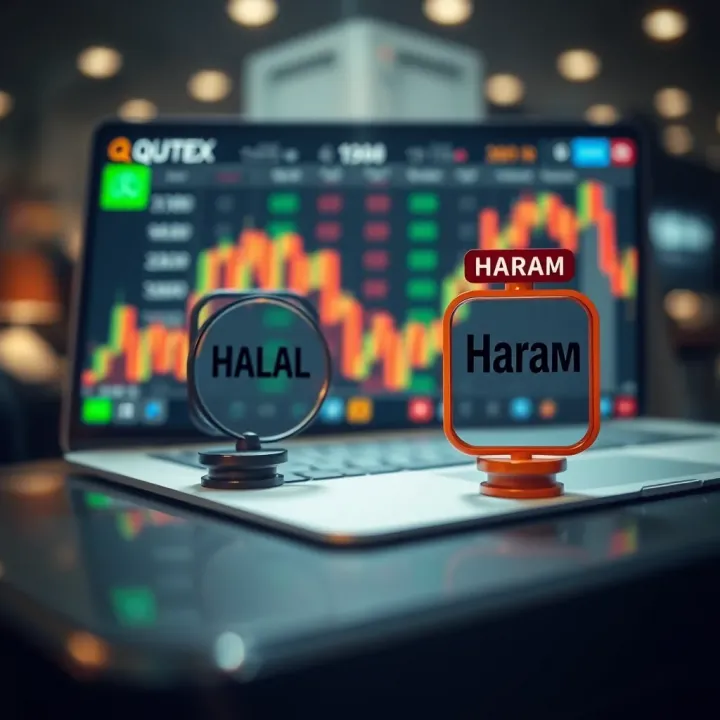
Islamic finance is rooted in clear principles that guide financial transactions to ensure they align with ethical and religious values. For Muslim traders, understanding these principles is essential to determine if trading activities, such as those on Quotex, comply with Shariah. This section walks you through the fundamental Islamic finance concepts relevant to trading, helping you better evaluate their practical implications.
In Islamic finance, halal transactions are those permitted and ethically sound, while haram transactions are forbidden due to unfairness, harm, or violation of Shariah rules. For example, earning profit through legitimate trade or services falls under halal, but gaining profit through deceit, fraud, or interest is haram. This distinction helps Muslim traders avoid financial activities that contradict Islamic teachings.
Riba refers to any fixed or guaranteed interest on loans or investments and is strongly prohibited in Islam. This means Muslim traders must avoid trading platforms or products that involve interest, directly or indirectly. For instance, earning a guaranteed fixed return from lending money or engaging in margin trading with interest charges on borrowed funds contravenes this principle.
Islamic finance insists that financial transactions should be backed by tangible assets or linked to real economic activity. It discourages purely speculative deals that do not involve actual ownership or transfer of assets. This ensures trading contributes to genuine economic growth rather than mere profit-making from price fluctuations without risk-sharing or asset involvement.
Gharar means transactions with excessive uncertainty or ambiguity, which make outcomes unclear and risky. Maysir refers to gambling or games of chance. Both are disallowed since they involve unfair risk and luck-based gains rather than effort or fairness. Trading involving bets on unpredictable outcomes without asset ownership often falls under these categories.
Islamic finance does not condemn all speculation but distinguishes responsible market participation from reckless gambling. Speculation becomes problematic when it leads to unjust enrichment or harms others. For example, buying shares based on informed decisions differs from betting on price movement without any real asset backing or business value.
Investment involves putting money into productive ventures with the expectation of profit tied to real activity and shared risks. Gambling relies solely on chance, with potential for instant gain or loss unrelated to underlying value. Muslim traders should focus on investments that promote economic welfare instead of betting on highly uncertain outcomes.
Understanding these Islamic principles protects you from unknowingly engaging in forbidden financial dealings. They guide you to safer, ethical trading that aligns with your faith and financial goals.
By applying these principles when assessing trading platforms like Quotex, Muslim investors can make informed decisions respecting Shariah values and avoiding haram activities.
Understanding whether Quotex trading complies with Islamic principles is essential for Muslim traders keen to align their financial activities with Shariah law. This evaluation focuses on identifying elements within Quotex's trading model that may conflict with Islamic finance principles, offering clarity on practical concerns. For example, if a platform's operations include gambling-like features or uncertain contracts, these can have significant implications on its permissibility according to Islamic jurisprudence.
Quotex primarily offers binary options trading, where traders predict asset price movements over short periods. This setup closely resembles gambling since profits depend on correct predictions, while losses occur on wrong guesses—without actual ownership or physical exchange. This speculative nature introduces maysir (gambling) into the transaction, which Islamic law strictly forbids. Practically, this means that even if one wins occasionally, the uncertain and chance-based environment places the trading within a questionable halal framework.
Another major concern is gharar—excessive uncertainty or ambiguity in contracts. In Quotex trades, users do not own the underlying assets; instead, they enter contracts based on price movements. This lack of asset backing means the trades do not represent real economic activity or ownership transfer. Islamic finance demands transparency and clear ownership to avoid unjust enrichment. Traders dealing without actual ownership risk engaging in impermissible uncertainty, making such contracts potentially haram.
Leverage amplifies both gain and loss in trading, but it may introduce hidden riba (interest), especially if borrowing is involved. While Quotex's model advertises leverage, the source usually entails borrowing capital on which interest may apply. Since Islam prohibits riba, trading activities involving interest—directly or indirectly—contradict Islamic principles. Muslim traders should be cautious of such practices, as inadvertent riba involvement can nullify the halal status of their investments.
Many contemporary scholars consider binary options trading as falling under gambling due to its speculative and uncertain nature. They highlight that these transactions lack real asset exchange and involve taking risks similar to betting. Such views caution Muslim traders against engaging in binary options to maintain their financial dealings within Shariah boundaries.
Some jurists argue that if a platform ensures transparency and asset backing, certain trading products might be acceptable. However, given the typical structure of binary options platforms like Quotex, most scholars lean toward prohibition. The divergence stems from varying interpretations of gharar and maysir thresholds but generally aligns in discouraging high-risk, uncertain contracts.
Traders aiming to observe Islamic principles must avoid platforms and tools that resemble gambling or interest-bearing dealings. Engaging with Quotex may expose them to religious violations and ethical complications. To remain compliant, traders are advised to explore Islamic trading accounts or Shariah-compliant investment vehicles that promote real asset ownership and avoid speculation. Consultation with qualified scholars can guide practical steps to align trading activities with Islamic finance rules.
Clarity on Islamic positions helps Muslim traders avoid investments that may compromise their religious obligations and ensures that their financial journeys stay within ethical bounds.
Trading in financial markets can offer good opportunities, but for Muslim traders in Pakistan, ensuring that these activities follow Islamic principles is equally important. This section provides practical guidance to help traders avoid unknowingly engaging in haram (forbidden) practices. Practical advice helps traders make informed choices and protect both their money and faith.
Islamic trading accounts and platforms offer a solution tailored to Muslim investors. These accounts avoid interest (riba) and prohibit speculative contracts that resemble gambling. Platforms like those offered by local brokerage firms sometimes provide Shariah-compliant options, where trading involves real ownership of assets like shares or commodities. For example, some Pakistani brokers now offer equity trading accounts that follow Islamic guidelines, allowing investors to trade stocks without engaging in interest or excessive risk.
Engaging in Shariah-compliant investment options means focusing on assets that meet Islamic criteria. These include investing in companies without interest-bearing activities and avoiding businesses dealing in alcohol, gambling, or pork products. Many Pakistan-based funds and investment firms offer Shariah-compliant mutual funds, which comply with these rules. This ensures that your investments are not only profitable but also ethically sound according to Islamic law.
The role of Islamic banks and funds is pivotal in offering halal financial services. Islamic banking in Pakistan follows principles like profit-and-loss sharing and avoids interest. Banks such as Meezan Bank provide investment accounts or savings products that adhere to Shariah. Similarly, Islamic investment funds managed by qualified Shariah boards allow investors to participate in various markets without violating Islamic restrictions. This makes them a safe alternative for traders seeking halal avenues.
Verifying platform compliance with Islamic finance rules is essential before starting any trading. Traders should carefully review whether the platform prohibits interest-based transactions, avoids highly speculative contracts, and ensures asset backing. For example, many Islamic finance scholars highlight the importance of transparency and confirmed asset ownership. Pakistani traders benefit from consulting platform disclaimers and terms about Shariah compliance.
Consulting qualified scholars or Muftis helps clarify doubts about specific trading practices. Since Islamic rulings can vary based on interpretation, seeking advice from scholars well-versed in Islamic finance ensures that personal trading activities remain halal. In Pakistan, many institutions provide access to certified Muftis who can guide traders on whether a particular trade or instrument is permissible.
Maintaining ethical trading behaviour completes the picture of halal trading. This means avoiding deceit, market manipulation, and unfair advantage over others. Traders should set realistic goals, avoid excessive risk or speculation, and practise patience. Ethical trading aligns with the Islamic value of honesty and fairness, which supports both financial success and spiritual satisfaction.
Practical steps like choosing the right platform, seeking scholarly advice, and following ethical behaviour help Muslim traders in Pakistan trade confidently without compromising their faith.
By adopting these alternatives and steps, traders can ensure their financial activities comply with Islamic principles while participating in Pakistan's growing market opportunities.
Making an informed decision is essential when considering trading on platforms like Quotex, especially for Muslim traders mindful of Islamic finance principles. This section summarises the key points from previous discussions, highlights risks to watch for, and suggests approaches to ensure ethical trading practices.
Quotex’s trading model clashes with several Shariah principles due to its binary options nature, which resembles gambling more than genuine asset ownership or investment. It does not involve actual buying or selling of assets but rather bets on price movement within a short window. This lack of underlying asset ownership and the presence of excessive uncertainty (gharar) make it problematic from an Islamic perspective. For practical purposes, this means Muslim traders using Quotex risk engaging in haram activities unintentionally.
Muslim traders face clear concerns such as exposure to speculative behaviour, potential involvement with interest-bearing mechanisms, and the chance of financial loss resembling gambling. These risks undermine both religious compliance and financial stability. For example, the reliance on leverage and short-term bets increases vulnerability to market manipulation and sudden losses, which Islamic finance seeks to avoid.
Given these concerns, Muslim traders should prefer platforms offering Shariah-compliant investment accounts, where trading is backed by real assets and void of interest or gambling elements. Using Islamic bank products or Funds certified by Islamic scholars provides safer, halal alternatives. Traders should also verify a platform’s adherence to Islamic ethics before committing funds.
Knowledge and diligence play a vital role in navigating financial markets responsibly. Understanding the mechanics of a trading platform and its compliance with Islamic law helps avoid inadvertent participation in forbidden activities. For instance, familiarising yourself with terms like riba, gharar, and maysir enables clearer judgement when assessing new investment opportunities.
Personal accountability cannot be overstated in financial decisions. Each trader bears responsibility for ensuring their investments align with their ethical and religious values. Maintaining records, seeking clarity on ambiguous terms in contracts, and avoiding impulse decisions help uphold this accountability.
Ongoing guidance from qualified scholars or Muftis is invaluable for staying updated as financial products evolve. By consulting trusted authorities regularly, traders can receive tailored advice fitting their circumstances. This helps maintain confidence in their trading choices, especially in uncertain markets.
Staying informed and cautious is the best safeguard for Muslim traders aiming to engage in halal financial activities while protecting their wealth and faith.
Explore Islamic views on trading 📈: what makes it halal or haram, key financial principles, and ethical tips for traders in Pakistan 🇵🇰.
Is leverage trading halal in Islam? Understand the risks, interest (riba), uncertainty (gharar) & gambling (maysir) from Islamic scholars' views 📈🕌
📈 Discover how to trade on Quotex in Pakistan! Learn about platform features, setting up accounts, trading options, smart strategies, and managing risks effectively.
📈 Learn how to create and access your Quotex trading account safely in Pakistan. Follow simple steps for login, password recovery, plus security tips for smooth trading.
Based on 7 reviews