
Is Trading Halal or Haram? Islamic Views Explained
Explore Islamic views on trading 📈: what makes it halal or haram, key financial principles, and ethical tips for traders in Pakistan 🇵🇰.
Edited By
Edward Chambers
Futures trading has gained traction in Pakistan, especially among investors looking to hedge risks or speculate on price movements. But for those following Islamic principles, the question remains: is future trade halal or haram?
In simple terms, a futures contract is an agreement to buy or sell an asset at a predetermined price on a specific future date. These contracts are common in commodities like wheat or oil, as well as financial indices. However, Islamic finance has clear rules to avoid practices involving gharar (excessive uncertainty), riba (interest), and maysir (gambling).
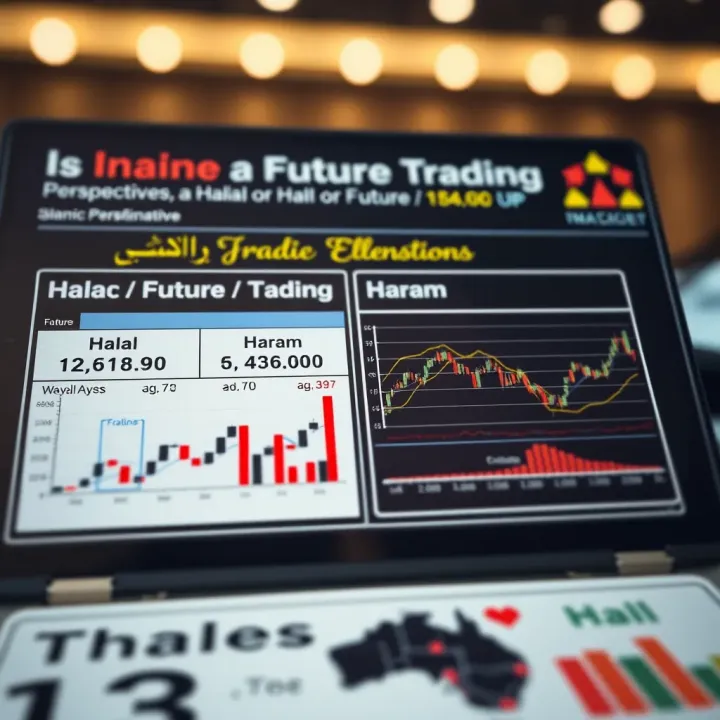
The controversy around futures trading revolves mainly around these issues. For example, since futures involve a commitment to purchase or sell at a future time, it resembles a sale of something not yet owned or delivered—this can conflict with Shariah principles that require actual possession before sale. Furthermore, futures markets often attract speculative behaviour, which some scholars equate to gambling.
"Islamic law requires transactions to be transparent and free from unnecessary uncertainty and speculation. Futures contracts often raise doubts in this regard."
Several respected Pakistani scholars and Islamic financial institutions have weighed in on these concerns. They usually focus on the contract’s nature, the asset involved, and whether the transaction promotes fairness or exploitation.
Gharar (Uncertainty): Contracts should not be vague or filled with unknowns. Futures often involve uncertain future delivery and price risks.
Riba (Interest): Any guaranteed return or interest embedded in the contract is forbidden.
Maysir (Gambling): Excessive speculation without underlying economic activity is discouraged.
Traders must distinguish between genuine hedging and speculative futures trading.
Engaging in futures contracts without owning the underlying asset or clear intention to deliver can lead to non-compliance with Shariah.
Alternatives like Salam and Istisna contracts, approved in Islamic finance, might offer halal ways to trade future goods.
Understanding these principles is vital before participating in futures markets. This helps safeguards against accidental involvement in haram activities while staying informed about market opportunities and restrictions.
In the following sections, we will examine how experts interpret these rules and what Islamic trading options Pakistani investors can consider.
Understanding future trade is key for traders and investors, especially in Pakistan where Islamic finance plays a significant role. Knowing how future contracts operate helps decide if such trades fit within Shariah guidelines. These mechanisms affect not just profits but the legality and ethical standing of transactions.
Futures contracts are agreements to buy or sell an asset at a predetermined price on a set future date. They serve as tools in financial markets to lock in prices, which helps businesses manage risk. For example, a wheat miller in Faisalabad may enter a futures contract to purchase grain at today's price for delivery in three months, protecting against price hikes caused by monsoon disruptions.
In financial markets, futures are standardised and traded on exchanges like the Pakistan Mercantile Exchange (PMEX). Traders can either hold the contract until expiry for delivery or close the position earlier to realise a profit or limit losses. These contracts provide liquidity and price discovery across various sectors.
Futures cover diverse asset types:
Commodities: Agricultural goods like sugar, wheat, and cotton, crucial for Pakistan's economy.
Financial instruments: Index futures, such as KSE-100 futures, allow investors to speculate or hedge against stock market movements.
Currencies: Futures on USD/PKR help exporters and importers manage exchange rate risks.
Each asset category has its own market dynamics and risk factors, making it vital for traders to understand specifics before participating.
Two main purposes drive futures trading: speculation and hedging. Speculators seek to profit from price changes without intending to own the actual asset. Hedgers, like farmers or exporters, use futures to protect against adverse price shifts. For instance, a rice exporter in Punjab locking in a future selling price reduces uncertainty about foreign exchange fluctuations.
However, futures trading carries risks. Leverage allows traders to enter positions much larger than their capital, increasing both potential gains and losses. For example, with 10:1 leverage, a small move in price can wipe out a trader’s margin.
Volatility is another concern; futures prices can swing sharply due to market sentiment, geopolitical events, or economic data releases. Traders must be cautious, especially when relying on short-term speculation. Managing these risks requires knowing position sizes, stop-loss orders, and not overextending capital.
Understanding both how futures work and their risks is essential before entering this market, especially within the framework of Islamic financial ethics.
Islamic finance principles offer a clear framework to evaluate whether future trading aligns with Shariah. These principles emphasise ethical conduct, fairness, and avoidance of harm in financial transactions. For someone involved in futures trading, understanding these rules is critical to ensure investments remain halal and avoid practices considered exploitative or uncertain.
Riba, or interest, is strictly forbidden in Islam because it involves guaranteed returns without risk or effort. In trading, riba can appear in the form of excessive interest charges or unfair gains not tied to actual economic activity. For example, trading contracts promising fixed income without owning the underlying asset or bearing risk falls under riba. This becomes problematic in futures contracts that resemble interest-like returns rather than genuine trade.
Gharar, meaning excessive uncertainty, refers to ambiguous or vague terms in an agreement that might cause unfair surprise or unjust loss to a party. In futures trading, contracts often involve delivery at a future date with unclear terms or conditions. This lack of transparency raises concerns since trading under gharar violates trust and goes against the principle of certainty in transactions.
Certainty and transparency safeguard all parties involved, ensuring that contracts are clear, fair, and free from deception or undue risk.
In practical terms, if a futures contract doesn't clearly define the asset, delivery date, or price in mutually understood terms, it introduces gharar. Therefore, Islamic finance demands clarity in all contracts, avoiding deferred sales or ambiguous delivery that create doubt for either party.
Physical possession or ownership of the asset is vital in Islamic contracts. This ensures the seller genuinely owns the goods being sold and can deliver them immediately or within the agreed timeframe. Immediate possession eliminates disputes and clarifies obligations, preventing unjust enrichment or speculation.
In future trading, the issue arises when contracts are made without actual ownership or immediate delivery, turning交易 it into speculative gambling. Islamic law typically requires that the asset must be owned at the point of sale for the contract to be valid. For instance, selling wheat that one does not yet possess violates Islamic contract principles.
Thus, Islamic contracts like Salam and Istisna allow selling goods before possession but only under strict conditions ensuring actual ownership transfers and certainty about delivery. These models highlight how Islamic finance balances risk with fairness, steering clear of transactions where ownership is unclear or delayed indefinitely.
To summarise, Islamic finance principles emphasise fair dealing, avoidance of interest and uncertainty, and require ownership with immediate delivery or clear contractual terms. These points form the basis to judge whether future trading complies with halal standards, influencing how traders should approach futures in Pakistan’s financial markets.
Understanding scholarly opinions on futures trading is essential for anyone engaging in financial markets from an Islamic perspective. These views help clarify whether futures contracts align with Islamic principles or conflict with them, guiding traders and investors in making informed decisions that respect Shariah law.
One major concern among scholars who declare future trading as haram centres on its speculative nature. Futures contracts often encourage gambling on price movements rather than genuine trade or production. This speculation introduces gharar (excessive uncertainty), which Islam strictly prohibits. For example, a trader betting on oil prices to rise without owning physical oil embodies this uncertainty. Such practices can lead to market instability and unfair exploitation.
Another critical issue is the lack of immediate ownership transfer in futures contracts. Islamic finance requires actual possession (milkiyah) of an asset at the point of sale. Futures, being agreements for future delivery, do not grant immediate ownership, thus breaking a fundamental Islamic trade condition. This absence often leads to mere paper trading, which many scholars argue resembles gambling, not legitimate commerce.
Some scholars accept futures trading conditionally, especially when used as a tool for hedging. For instance, a farmer in Punjab might use futures contracts to lock in a sale price for wheat, protecting against unpredictable market fluctuations. This application aligns with risk management rather than pure speculation. When the intention is to avoid loss rather than gain through chance, futures trading may gain approval.
For futures to be considered Shariah-compliant, conditions like immediate asset possession and transparency must be fulfilled. Some Islamic financial institutions design contracts resembling futures but ensure the underlying asset is owned and delivered on time, such as in salam or istisna contracts. Additionally, the contract must avoid elements of riba (interest) and gharar by clearly stipulating terms without ambiguity. Traders using such compliant instruments receive better clarity on permissibility within Islamic law.
Traders and investors should consult qualified Islamic finance scholars to ensure their futures trading activities meet these ethical and legal standards.
By understanding these contrasting scholarly views, Pakistani traders can navigate futures trading with greater confidence and adherence to Islamic principles.
When dealing with future trade in Pakistan, understanding practical factors is essential for traders aiming to stay compliant with Islamic principles and local regulations. This section explores the regulatory framework influencing future trade and highlights halal alternatives available domestically, providing actionable insights for traders navigating this complex landscape.
The Securities and Exchange Commission of Pakistan (SECP) plays a vital role in monitoring and regulating trading activities to ensure they align with Islamic finance standards. The SECP issues specific guidelines for Shariah compliance, especially for financial products offered within Pakistan’s markets. These guidelines seek to eliminate elements like excessive uncertainty (gharar) and interest (riba), which are impermissible under Islamic law.
Practically, this means that conventional futures contracts may face limitations in Pakistani markets due to potential conflicts with these principles. Traders must verify whether a contract carries SECP approval or Shariah board certification before participation. For instance, the SECP's support for Islamic finance products has pushed forward contracts like Islamic forwards and salam contracts as compliant alternatives.
Pakistan’s market realities further influence practical decisions. The local financial ecosystem often lacks fully developed conventional futures instruments due to these religious and legal restrictions. Most trading activity occurs in equity and commodity markets with limited derivatives. As a result, traders look for instruments custom-tailored to the domestic environment, balancing risk management with compliance. This includes contracts designed to minimize speculation while focusing on real asset exchange.
Islamic forwards and salam contracts offer trade mechanisms consistent with Shariah rules. A salam contract involves upfront full payment for goods delivered later, removing uncertainty about ownership and delivery timing. For example, a farmer in Punjab could use a salam contract to sell wheat to a buyer before harvest, securing funds early while ensuring product delivery later. Such contracts reduce gharar and avoid interest, making them halal alternatives to futures.
Similarly, Islamic forwards are arranged to allow bilateral agreements on asset prices for future dates without violating Shariah by ensuring ownership transfer and eliminating ambiguity. They help traders hedge price risks in a Muslim-compliant manner. Pakistani commodity markets and agricultural sectors find these tools particularly helpful, as they align with Islamic guidelines.
Takaful (Islamic insurance) and Islamic hedging solutions provide additional layers of risk management without engaging in prohibited elements. For example, takaful schemes offer cooperative risk sharing among members rather than conventional insurance’s risk transfer model, which often involves interest. Meanwhile, Islamic hedging tools, designed by Shariah-compliant financial institutions, enable traders to protect their investments against price fluctuations more ethically than conventional derivatives.
Pakistani traders aiming to participate in future-related trade should prioritise alternatives properly vetted by regulatory authorities and Shariah scholars. This approach balances prudent risk management with adherence to Islamic principles.
Together, these practical considerations inform traders and investors how to operate within Pakistan’s financial system responsibly and compliantly, avoiding pitfalls associated with traditional futures markets while utilising suitable Shariah-compliant alternatives.
Trading futures in the Pakistani market requires careful examination beyond just profit prospects. Prospective traders must evaluate the entire transaction structure to ensure it follows Islamic principles, particularly avoiding anything that resembles gambling or unfair speculation. This means looking closely at whether the contract is clear, transparent, and free from excessive uncertainty (gharar). Equally important is the trader’s intention and the actual economic benefit derived, such as possession or usufruct of the underlying asset.
One of the main Islamic finance concerns with futures trading is gharar — literally uncertainty or ambiguity. When a contract lacks clarity on essential elements like price, delivery, or ownership, it opens the door to dispute and unfair advantage. This can make the trade impermissible under Islamic law. For example, if a futures contract leaves delivery time vague or relies on speculative price movement without real asset exchange, it involves gharar and should be avoided.
Practical transparency means all terms must be explicit and understood upfront. Traders should only engage in contracts where the deliverables, payment terms, and timing are clear and not subject to guesswork. A contract uncertain in these domains risks being classified under prohibited gharar.
Islamic contracts emphasise the transfer of actual ownership or usufruct (benefit) of the asset. This means the contract should result in possession of the commodity, even if delivery is deferred, like in salam contracts used in Islamic finance. When futures trading lacks this element, especially if settlement is only in cash without asset exchange, it raises questions about its permissibility.
Consider a trader buying a futures contract on cotton; if the contract involves direct ownership of the cotton upon expiry or ahead, it aligns more closely with Islamic requirements. However, cash settlement without transferring the physical commodity may fall short of Shariah standards. The intention behind the trade also matters—profits should come from genuine asset use or transfer, not mere speculation.
Given the complexity of modern financial instruments, traders should seek guidance from scholars specialised in Islamic finance. These experts understand nuances around contracts, financial risk, and Islamic jurisprudence. Their knowledge helps traders avoid unintentional involvement in impermissible trades.
For example, scholars associated with Pakistan’s Islamic finance bodies or accredited Shariah advisory boards can evaluate specific futures contracts. Their advice can clarify whether a product fits within halal trading frameworks or if it requires caution or avoidance.
Many financial institutions now have Shariah boards that review and certify products compliant with Islamic law. Traders should prioritise engaging with instruments that have such endorsement. This certification assures that the contract's structure follows Islamic principles, including transparent terms, absence of riba (interest), and avoidance of gharar.
For instance, Islamic investment funds or brokers offering futures-related instruments with Shariah approval provide greater confidence. Before committing, traders should request confirmation or documentation of this approval. This reduces risks and supports ethical, Shariah-aligned trading.
Making informed decisions in future trading means prioritising transparency, genuine ownership, and expert Islamic guidance. These are essential to navigate the borderline between halal and haram effectively.
By focusing on these aspects, prospective traders in Pakistan can better align their activities with Islamic finance principles while managing economic risks responsibly.
Explore Islamic views on trading 📈: what makes it halal or haram, key financial principles, and ethical tips for traders in Pakistan 🇵🇰.
Learn how to safely trade cryptocurrency in Pakistan 🇵🇰. From setting up exchange accounts to smart risk management and local rules, get practical tips here! 📈💡
📈 Learn how to trade cryptocurrency in Pakistan with our practical guide! Discover key tips, platform choices, risk management, and security advice for safe trading.
💹 Learn how to trade CFDs in Pakistan with this practical guide. Understand basics, strategies, risks, and local regulations to trade smart and safe!
Based on 9 reviews